aetherograph: A black demon in a chunky black turtleneck sweater and a black sunhat. His head is a notebook splattered with viscous black stuff and has a single eye on it. (Inky Notebook Object Head)

I think the new grindhouse is tiktok, is twitter, is social media. You're being sold titillation as reality and education. But you're just there to feel the thrill of watching something "morally forbidden", which is what exploitation films have been doing since the beginning of film. We're in a new era of grindhouse/exploitation in that the T&A have a near-total ban but the violence is so high we're watching real people die on camera as entertainment while saying it's about awareness and news. I think this speaks to how violent our society has become, much like the increased violence of post-Kennedy assassination films reflected an increase in American violence before us. But it's escalating. I wonder when and if it will ever stop.

I think there is certainly an element of media shaping culture now that wasn't there before, because social media is influential in a way that mass media never was, social media gets into your brain more than mass media did, it's more insidious and it's better at the purpose of media, which is to get you to put another quarter in the slot. But the difference is it's no longer a quarter, it's your attention, it's your information, it's your emotions. It's selling you something but you are the currency. And there's all kinds of repurcussions from that which people don't even have names for yet. I mean, I was suffering from cyberbullying back in 2001, I got VERY ill after being introduced to social media for the first time, with mental illness that still doesn't really have a name. If you talk to teachers there's a very real sense of panic because they're watching a whole generation of children suffering from problems that don't have names. There's something happening and we don't have the language to describe it yet.

But I think the elements that are creating these effects have always existed. I think the urges have always existed. I just don't think they've ever been combined into one thing like this before.

But I am worried. I am scared to interact with people now, they seem so much meaner than before. Everyone is only thinking of what's the funniest reply, what's going to get me the most attention, the most views, how do I win attention. Attention is the new currency, and if attention is the new currency then shame can't exist, because that would cut down on the opportunities for attention that you take, and you need to have The Most of it to win.

As someone that basically immediately had to quarantine away from social media after five minutes on it destroyed my entire life, I look at how there's whole jobs where your job is to Make Posts and just scratch my head. I mean I thought documentarians were weird, but there's whole genres of horror that revolve around social media now, and they're basically xenofiction to me. There's an assumption now that everyone wants to be famous, everyone wants to have their follow count go up, that this replaces interacting and speaking with anyone. There's a kind of distance people maintain, and it isn't just young people it's literally everyone. It's so much easier to be a fair weather friend now, so basically EVERYONE became that disengaged with other people. I don't think Covid is to blame here, I think this was snowballing long before that.

The grindhouse is now your phone. You are in it 24/7. Kids grow up there. Even the government of my country has become just a bunch of grown-ass people old enough to be my grandparents jockeying for who can make the best Post, who can get the most attention, when they aren't having mental breakdowns while typing it all out for the world to see. Our very lives have become exploitation films.

When reality is a film, nothing is real and nothing matters. People aren't real, they're characters in your film. The world isn't real, it's just a set for you to perform on. So courtesy isn't real. Rules don't matter. Laws don't matter, the only law is that you MUST pursue Going Viral and Becoming An Influencer.

I'm not sure what happens after this, I'm not sure how to navigate it. I feel like I'm the only person who is standing outside the grindhouse, who even knows there IS an outside. I feel a lot of things about all of it, but mostly?

I'm scared.

aetherograph: A black demon in a blue button-down shirt. His head is a CRT TV with a branch through the screen. One eye stares over the static on the screen. (Static Broken TV Object Head)

I've heard all the arguments for fat vampires and I understand them, however. My vampires are thin because of several layers of reasons.

Reason 1: I grew up with vampires that were not just thin people but the special level of emaciated that was happening in the 80s and 90s. Ditto with the people these vampires were attracted to.

Reason 2: I also know enough about history to know that vampires would NOT find that level of thin attractive, would not find really ANY level of what we would depict on screen as attractive at all.

Reason 3: The vampires are ugly to their own eyes, and are supposed to seem rangy and starved compared to every single mortal character, all of whom are fat. The vampires find the mortals attractive.

Reason 4: I grew up thin and female in a world that prized thinness with the exception being my father, who was VOCIFEROUS in his reinforcement that he liked fat women and that men worth anything did like fat women. He did this on purpose around us, his daughters, whenever he saw some sort of pop star or thin starlet on the tv. He made sure we heard him say this. It was his way of trying to counteract the harmful messages the media was trying to sell us. It worked on me, saving my actual life and health when I got into the harsh world I did as an adult. Even so, I wanted to turn the trope of "only fat people could be attracted to fat people" around. I wanted to make thin people angry. I wanted to deny thin people what they deny fat people, because "turnabout is fair play" is something I'm very into. This is particularly something I want to do now that I have achieved my lifelong goal of becoming fat.

So no, fat vampires are not happening in my books. I don't find the idea to be liberating or wish-fulfillment as much as thin vampires that find ONLY fat people to be attractive. I don't want to play with the idea of fat vampires symbolically either, I have nothing to say with it.

If you want to write fat vampires go right ahead, power to you. But it is a power fantasy to have the monster everyone in mainstream society finds attractive choose ME, who is deemed by those same people to be ugly, who would NOT be chosen by those same people.


aetherograph: A black demon in a chunky black turtleneck sweater and a black sunhat. His head is a notebook splattered with viscous black stuff and has a single eye on it. (Inky Notebook Object Head)

Horror and porn and comedy are all the same thing and are all inextricable from one another and anyone who says otherwise is wrong.

This isn’t just structural (which I’ve talked about before) it’s also due to the fact that the dominant force in film was ruled by the Puritans for almost 75 years—the FIRST 75 years of filmmaking—and the way that warped the family tree of films is inescapable. We can’t show screams of orgasm but we can show screams of horror. We can’t show pleasure but we can show pain. We can’t show queers unless they’re evil or a joke. And that has innumerable knock-on effects.

We can show queers now but nobody has any established tropes for them that aren’t warped and twisted. We still can’t show naked bodies unless its violence. The only bodily fluids we can show on screen are blood and vomit. So those become the conduit, the symbol, the mask that sex has to wear.

This is true even in shows and films that seem like they’ve escaped the censors, like Helluva Boss or Polar—showing anything sexual that isn’t violence or comedy still makes people immediately and automatically shove the entire film into the “porn” category. And being shoved in that slum is death to your ability to break even, so everyone wants to avoid it and obeys the silent censor that is the Great American Public. The Hays Code may be dead but its ghost lives on in every single American citizen, whether they think so or even know what the Hays Code is. That’s what legacy means.

So horror is where we find one part of visceral part of sex, and comedy is where we find the other part.

And this is why queerness in film being openly portrayed as normal and everyday is having trouble. Because for so long, like a century I would say, queerness was part of that “pornographic” that we weren’t allowed to show, and so we showed only in the mask of comedy or horror. And now that we have that mask off, there’s nothing to build on that isn’t that legacy. We are starting as though from absolute scratch in that department, and it isn’t helped by the fact that in many ways we don’t connect with each other as a culture, because we were never supposed to be a culture like say, being Irish or Black or Mexican is a culture. Being queer isn’t an ethnicity or a nationality, it’s just something that normally happens, like having cilantro taste like soap. Yet because being queer was a crime, we were forced into a secretive way that created a culture because we were excluded from regular culture. And now there’s this additional trouble, because now there IS a culture, and a history, and being told “you’re accepted now!” means we’re having to grapple with having a culture but also this wasn’t supposed to be a culture in the first place, but it IS now, but we’re being accepted now so… what does that mean? What does it MEAN?

And I don’t have an answer. But I know we’re going to be struggling with that, and I think it’s worth acknowledging that struggle between the pressure to assimilate and the sure knowledge that we have had our own parallel history running beneath straight society this whole time, and that many of us really want our youth to know that history, because we feel like any culture feels in that regard, and want to pass on our history and have pride in our own culture.

And in the meantime, filmmakers and showrunners struggle with having zero tropes and zero previous works to build on, with having to struggle with only having two abysmal choices: assimilation or queerphobic tropes. We have no third option right now, because that’s the legacy of being oppressed and being a culture that doesn’t really have genetic throughlines where you can pass from parent to child like others do.

I have no real conclusion, like I said I have no solution. I’ve just been observing myself, and thinking about why I choose horror, comedy, or porn time and again, and why nothing but horror, comedy, and porn have ever appealed to me, and why I am constantly dissatisfied with the new queer portrayals in media, and why they feel empty compared to the queerphobic tropes of times past, which feel more real and even stereotyped as they are, they feel less vapid and insulting. I’ve been thinking a lot for the past few years about why I would prefer to be viewed as something monstrous than something normal, why the new portrayals of queer love feel nauseating and fake and why the only ones that feel real are the fucked up ones full of yandere and angst. It’s because that’s building on what came before, that’s acknowledging the history and depth of reality, rather than trying to do what feels like assimilation into straight culture.

For the past few years I’ve met more and more young queer people who have never in their lives experienced queerphobia, and because of that they have never sought out our historic cultural gathering places and events, and because of that, they read as being very assimilated and alien to me, and it has made me realise I don’t want to be assimilated. I don’t want to be accepted by the straight culture that most of MY life has been trying to erase me, and is STILL trying to erase me specifically because I’m “too queer” because I was ejected and went and FOUND queer culture.

I don’t want to go to the movies and see Josh Gad portraying LeFou, or seeing two femme lesbians in a co-dependent relationship that is meant to be cute, or teens stumbling and stammering through crushes and dates and prom nights. I want to see a gay man burning the world down because the man he loves laughs in his face, I want to see a drag queen telling her paramour that “people like us don’t get into Heaven”, I want to see a man blow up his marriage and family life because he came out and got a boyfriend and started LIVING. I want to see a horror movie where a gay man goes back home because someone died and has to deal with the horror of being shoved in the closet again. I want to see a villain gleefully sing about drowning widows and orphans while he chews up the scenery and ends by playing mournfully on a harp about how his nemesis won’t let him be before switching from sad to fury. Being told that acceptance comes on the condition that the visceral is no longer present does not feel like acceptance.

It just feels like a new version of the Hays Code.

aetherograph: A black demon in a pink button-down shirt. His head is a floating cube with pastel pink and green sides and sfour strange eyes asymmetrically placed on two of the sides. (Default)


This video made me realise a few things about the song he forgets to mention: Court of Miracles

If Hellfire is someone not realising that they're bending the rules to justify their feelings, and remaining rigid and unchanging, Court of Miracles is people being very self-aware of how they're breaking rules and lying to the outside world because that's helps them to adapt to where they are and survive. And, listen, I don't have a music theory education, I have a creative writing, history, and visual art one. All I can do is analyse the themes present in the story and the visuals, but I couldn't tell you how Mencken reversed or flipped the themes of the score in Court of Miracles.

Clopin is also a secondary villain, but he's one of Disney's very few Trickster characters that is truly a trickster, not altogether good but not altogether evil--which is shockingly nuanced, for Disney; but the source material was very nuanced--and Clopin is exactly the opposite of Frollo in a lot of ways, though not in the same ways that Quasi is, because it's opposite on a different axis.

Clopin is so, so incredibly Aware of everything and everyone that he's not just the diagetic narrator, he's the non-diagetic narrator too. He's aware of the audience, all but turning to the camera several times. He controls the actions of the crowd several times--or does he merely speak their thoughts so we the audience know what they are about to do? Is he speaking for the crowd or is he speaking for Notre Dame herself? It's unclear, it's wonderfully unclear and it puts Clopin into this very old, medieval role that basically doesn't exist anymore, further pushing your perceptions and sort of reminding you at every turn to be aware that this is a narrative, and narratives have layers.

So let's talk about Clopin being both narrator and secondary antagonist to all the protagonists of the film, and the fact that he gets two diagetic numbers--in fact, he might have three, and he might also have the only diagetic music IN the film. But let's stick to two, because there's something very interesting that he does in both.

See, Frollo musically controls one person--Quasimodo. But in each of Clopin's two songs, he's controlling every single person you see that isn't one of the protagonists. In Feast of Fools, his narration controls what you see on the screen, and when he stops singing, the crowd forms a mob that goes from celebrating Quasi to humiliating him. In Court of Miracles, it isn't Esmeralda alone that stops the hanging--it's only when Clopin incorporates her speech into further theatre that the tension de-escalates.

So, why. Why this. Here's the thing you cannot shy from with this movie: it is about and takes place in pre-Protestant medieval Roman Catholic Christendom. That is a very specific culture and it has a very specific entity that is part of the cosmology of God and Heaven and Hell:

The Devil.

Now, the medieval Roman Catholic idea of the devil was different than the Protestant one we have today. The Devil was not able to control you, at all. The Devil wasn't real, that was the official position of the Catholic church. The Devil wasn't a real entity, and witchcraft/magic wasn't a real thing, either, because they went hard on "we are a monotheistic religion and God is all-powerful". This adds an additional layer of heresy (or is it blasphemy?) to Frollo's calling Esmeralda a "witch" and blaming the devil for his Lust. That's specifically not what Catholics were supposed to believe at that time, in that place.

But the devil existed in pop culture of the time, sure! He was a fictional, allegorical figure in biblical plays, which were often done by travelling theatrical performers during holidays such as Christmastide (which the Feast of Fools is the end of!). The folk devil can still be seen in any number of fictional depictions of the devil where he's depicted as a Trickster rather than the menacing figure the Protestants made him centuries later. I would argue that Clopin is meant to symbolise this Trickster role in the Christian worldview of the period; but lest you cry foul, I would like to point again at the fact that Clopin controls/acts as the voice of the mob. In that sense he IS playing the role of the impulsive and fickle vox populi. And it's VERY interesting that while Clopin threatens the lives of the protagonists once, he still comes off as being far less evil than Frollo, who is not equated with the Devil. I find that interesting, symbolically, because this is about the ONE time Disney could have just equated the main villain with the actual real Devil, and chose not to, chose the more historically-accurate view of the devil as not a powerful person, not even as a Faustian Devil; but a person who is Unsettling becasue he's Aware--Aware Of Being In A Larger Narrative. And that's kind of the Devil's whole thing, isn't it? That he's Aware, that he Knows. He can see the fourth wall.

Clopin fascinates me, because he's one of Disney's very, very few animated characters that is morally neutral and aware of the fourth wall. He's antagonistic but also he's not motivated by anything but The Bit. He's a pure Harlequin, tricksy and motivated only by his own whimsy, not ambitious but contrarian, only dangerous when provoked directly, and he bleeds charisma. That's not an animated character you see in Disney, but it's certainly a familiar archetype, one that you can see in another very much more famous animated character indeed: Bugs Bunny. (Specifically, Chuck Jones' Bugs, who has the distinct-from-Daffy personality that we all know as Bugs' personality.)

The Fable

Jan. 5th, 2026 11:33 pm
aetherograph: A black demon in a pink button-down shirt. His head is a floating cube with pastel pink and green sides and sfour strange eyes asymmetrically placed on two of the sides. (Default)

I grew up in Hollywood. I'm telling you that so I can tell you this:

If you grew up that close to it, and your parents were in the industry but weren't--and this is important--part of the Chosen Few, the Nobility that is The Actors and Directors, you kept your kids off stage. You did not let them get involved with that. You discouraged them from pursuing it by telling them The Fable:

Once, there was a Young Performer, and they were beautiful, and they were virtuous, and they were... naive.

There was a Slick and Well-Dressed Man that saw the Young Performer perform, and he used Flattery and offered the Young Performer gifts: Money, and Success, and--worst of all--a bauble he called Fame.

And it was Beautiful.

But the gifts came at a price, the Young Performer had to Sign a contract.

And they were

Naive

After they signed, more Gifts came into view: Drugs, and Sex, and Drink, and the Slick and Well-Dressed Man pushed the Young Performer harder, not letting them rest, not letting them Control Their Performance, not letting them, fullstop. And the new Gifts helped them stay up longer, work harder, helped to comfort them at night.

And it wasn't Beautiful anymore. And the Young Performer burned up into a husk, and was left to languish in the gutter, no longer Beautiful.

The end.

If you recognise this Fable, it's because we tell it so often to everyone, it's because no matter how many times we tell it, or how many ways, there's always some who do not listen, who do not listen, and so we scream and scream and scream and still that bauble glistens like some evil thing.

I was never Christian. I don't understand fear of the Devil. But I think if I ever got close it was the way I feel about that bauble, Fame. It is wonderful, in that it invokes wonder. It is awesome, in that invokes awe. It is terrific, in that it induces terror. You should not reach for it. You should never hold it, for it is hotter than magnesium fire, and it will

Burn

You

To

Nothing.

California has laws, now, about child stars. We have had laws on the books because of how ill-used child stars were and are by their guardians. We have new laws on the books, very recent, about social media and children that help protect children--once again--from their guardians. It made a lot of the mommy youtubers mad as hell, which is how you know it's a good law that liberates the children.

I do not want laws that restrict children, I want liberation and that means education. It used to be that the children that most needed to hear The Fable were our own, where showbiz children, were children of critics, of techs, of production artists, of animators, of everyone that is involved in filmmaking that you never see and don't think about, because nobody stays to read the credits but people with family in there. The people called just "crew", as in "cast and crew". The people in black.

Social media changed all that, made Fame suddenly sparkle, bright and shiny, no Slick and Well-Dressed Man needed, no bravery to get into performing by yourself on a stage needed, no, now it sits in your pocket, wherever you go, burning a hole in it. Fame. Sparkling. And it got shot all over the world, to places that had never heard of it, that weren't inoculated, that are susceptible. They call it "going viral" and people ignore that viruses make you sick, and viruses kill you.

Heed the warning in the Fable. Heed the warning in the Fable we tell over and over and over and over and over and


aetherograph: A black demon in a pink button-down shirt. His head is a floating cube with pastel pink and green sides and sfour strange eyes asymmetrically placed on two of the sides. (Default)
I grew up in a cookie household. We didn't do cakes or pies, we did six different cookies. Every year. This one was the family favourite, and it's the favourite of everyone I've ever introduced to it. Nobody I've ever shown it to has ever seen it before, so this is my gift to you.

Golden Tassies

Special Tool: 24 cup mini muffin pan. Or two 12-cup ones. Whatever. You need space for 24 mini muffins in your pan(s) is the point.

Pastry
- ¼ lb (1 stick) butter, cold
- 3oz cream cheese
- 1 cup Wondra flour

Cut butter and cream cheese into flour until it forms a dough. Pat lightly into ball. Divide in half, then quarters, then eighths, then divide each eighth into 3 equal pieces. This should give you 24 balls of equal size. Press each ball gently into the cup of a mini muffin tin, OR you can gently pat the balls into circles and press them into the muffin tin cups that way, whichever is easiest.

Filling
- ¾ cup brown sugar (packed)
- 1 unbeaten egg
- 1 Tbls melted butter
- 1 tsp vanilla
- 1/8 tsp (dash) salt
- ¾ cup chopped pecans

Oven preheat: 375F

In a small saucepan over VERY LOW heat, melt the butter, and add the sugar, nuts, vanilla, salt, THEN make a small well that does not bare the bottom of the pot and add the egg, mixing well until everything is wet and evenly blended. Remove from heat and spoon into pastry cups. Optionally you can add a whole pecan on top of each one.

Oven: 375F for 15-17 mins, THEN turn oven DOWN to 250 for 10 more minutes.

Makes 24.

Notes:
- If you have more pastry cups than filling, fill remainder with whatever jam you have lying around.
- Special dishes required: mini muffin tin (enough to make 24)
- I highly recommend making this recipe twice, rather than doubling it, if you want to make a larger amount.

Per Ardua

Dec. 24th, 2025 12:44 am
aetherograph: A black demon in a pink button-down shirt. His head is a floating cube with pastel pink and green sides and sfour strange eyes asymmetrically placed on two of the sides. (Default)

Just finished miniseries from 2000, Longitude.

While watching it (it took me a couple days), I often wondered WHY this series got made at all, when it's about such a niche subject with little mass appeal.

Then, the ending narration started, and reminded me exactly what mindset we all had, coming into the year 2000: that this is a new MILLENNIUM. That this was not just a new century, but a new age, and people used consider that with Wonder, and Awe, that we once looked upon the coming dawn as a dawn. As a beginning of some new unknown day full of new horizons, that had something in common with all moments in human history when something new changed everything about the world forever.

Honestly, it gave me perspective long forgotten—and hope, in the doing. Not the small hope I've been struggling to maintain for years, but the big one.

That we are Tired from the Nonsense does not change, I realised, that this is still the beginning of a new millennium that many of us were not born into, but saw dawn. That it IS a new age, and the signs of that are the Nonsense. For Change never comes without Struggle, and Great Change never comes without Great Struggle.

John Harrison revolutionised navigation only after 40 hard years of struggle, fought every step of the way by Institutions, by Authority, by Time itself. Yet look down at your clock. We know the EXACT time in part thanks to his lifetime of toil, his unending devotion to Perfection—and the lives that closer and closer proximity to Perfection would save. Knowing the second can mean a difference of miles to a ship—whether at sea or in the air. Harrison likely could not have imagined his species would one day leave the ground and make ships that travelled through the air, let alone to the stars—ships that, still, navigated and relied upon the work he achieved.

We owe a great debt to him. Alongside Salk and Pasteur, we should, too, know the name of John Harrison.

He was not a clockmaker by trade or birth, he was a carpenter that was self-taught in a time when that simply wasn't something you were allowed to do. He made clocks that, even when he was first starting out, were better than any clocks available in his country. They lost fewer seconds, they gained fewer, and this was before they were made of a clockmaker's components, in a clockmaker's materials! He was given no special opportunities to learn, struggled even to get a letter of introduction to a clockmaker to apprentice to; and even when he succeeded again and again, the Longitude Board never gave him the prize they had promised, kept moving the goal-posts, kept insisting that astronomy was the way forward even when it clearly wasn't.

It is not yet forty years of the new millennium, and I have already seen things I had been told, as a child, would be impossible for all time:

  • "We will never know what dinosaurs really looked like, sounded like, or what colour they were." Except we do now. I watched that happen. I watched warm-bloodedness go from crackpot theory to fact. I watched feathers go from crackpot nonsense to finding feathered specimens. I watched birds are a kind of dinosaur that survived go from crackpot nonsense to fact. We know what colour at least one dinosaur was, if not more, and we are finding more specimens every day that have soft tissue preserved. We know what texture they were! We know what colour, what shapes. We even found enough to know what they likely sounded like!
  • We went from having maybe 3 photographs of animals from the deep sea to having film of the actual sea-floor and the many, many animals that live there. So many people around the world know, in fact, that deep sea anglerfish have featured in more than one film that wasn't a documentary!! The deep sea went from being universally reviled to having a great many admirers all over the world. If you had told me as a child that one day I would be able to not just watch footage from the deeps but also hear the scientists that were controlling the camera, in real time, I would not have believed you.
  • Video calls are now commonplace everywhere, and as a kid watched Star Trek, again, that seemed like magic. Whenever it was done in films it WAS movie magic, in the form of a pre-taped bit playing on the tv in the movie or show, and the actor answering with their lines. It was never real because it couldn't be, not in real life. And as frustrating as they are over wireless networks, that they're possible at all is startling.
  • There's been people living whole years in space on a space station that all nationalities of people doing science have been working on for decades. That's the closest to the Enterprise we've ever fucking gotten and it happened in my mom's lifetime--my mom, who was a little girl when Star Trek first premiered with the so-called "impossible dream" of many nations working together doing science in space.
  • I watched so many people create things that were queerer than I ever imagined would be allowed. I watched everyone younger than me get to live a better version of being trans than I ever got to and I'm not even forty yet.
  • Animation went from almost dying out to EXPLODING into a joyful new age, starting the exact year I was born.
  • Disabled people crawled up the capitol steps in my country and screamed and organised and railed and fought and now my country has encoded into law the most rights and regulations meant to make disabled people's lives better, that defends our human dignity and rights, of any country in the world currently. That happened only ten years before the dawn of the new millennium, in 1990. We've had the ADA for 35 years.
  • In 1982, there were only 22 condors left Now, there are nearly 500. Over 300 fly free in their natural habitat once more. The first wild baby chick hatched in 2001.

This isn't everything. But even just these things are an incredible amount of change for only forty years, even for only 25 years. Day to day, with how bad news sells clicks, with how fear is easier to feel than elation, with how we don't see the fruit of the slow behemoth that is Policy and Lawmaking until decades after victory, yet defeat is often swift and instant, it's easier to feel despair. In this era of nostalgia, of only looking back, of a growing sense of doom, it is hard to turn around, and look forward, and feel hope, let alone Wonder and Awe at the dawning age.

But it helps to connect with the discoveries of the past, the pivots that took forty years of a man's life to see victory, that did not mature in time for him to even SEE what far-reaching consequences his achievement made possible

We put people into space because of a man in 1707 deciding that making a clock that could work at sea was worth spending his life persevering to do.

So, who knows what is ahead? Who knows what ripples will be sent out from your actions?

But I know one thing for sure: it will be an awfully big adventure.

aetherograph: A black demon in a pink button-down shirt. His head is a floating cube with pastel pink and green sides and sfour strange eyes asymmetrically placed on two of the sides. (Default)

Just read this article, have some thoughts. It’s by a British critic, and he does NOT tell you he’s only a critic from the outset, which I think is a little dishonest. So, I’m going to tell you at the outset that I am a professionally-trained writer and storyteller, as in I went to school for it and was taught by working writers, led by Tim Powers and James Blaylock; and I have been actively writing and publishing and receiving feedback from both the audience and other writers about my writing since I was 13 years old. Traditional publishing is something I grew up expecting as the norm, and it is still the way I consider myself to be inclined, having investigated, observed, and considered self-publishing; but ultimately deciding that is not what I am about. I tell you all of this at the beginning so you know how to weight my opinions on Vazh’s claims about my profession and my craft.

There’s parts of his article I agree with, and parts that seem to be tarring every single SFF writer with the same brush; he then disclaims himself only once you get toward the very end like, “I’m not a writer” ok, well, that means I’ve just thrown most of your credibility out the window, fella. I mean, he makes some good points, and I’m sure he’s right about the publishing history, and I know he’s right on the bits about Racefail and so on; but I’m not sure the whole article and his sweeping (and rather smugly self-congratulatory) conclusion about “SFF is full of rabid idiots, Horror is the only good genre; we’re sooo much better than them” is the best conclusion to draw here.

I’ve attempted to get into horror, from Benny Little, to Stephen King, to Poe, to Lovecraft, to classic stuff like Frankenstein and Dracula and Jekyll and Hyde; and I think I’m just not someone that gets scared from a book? I’m not sure. I do like a lot of those stories—Poe is my favourite author—but they don’t scare me. And it isn’t that I’m not afraid of anything—I’m afraid of a lot of things. I can’t listen to The Magnus Archives, for example. My point is, I don’t know why he’s holding up King and Lovecraft and other popular writers of the horror genre like they’re appreciably writing anything of different quality to their peers in other genres… except that they happen to scare him, which he seems to interpret as them having some kind of mystical power. Which, “whether it scared me the first time I read it—me, someone who only reads horror” is a terrible metric.

Because writing is not mysticism, it’s not magic—it’s a craft, like woodworking. What you personally like is not necessarily objectively better than what you don’t (a stupidly large amount of so-called critics don’t seem to understand this). The question isn’t “did I like this?” it’s “was this concept executed well?”. I’m not going to put a hand-carved wooden mechanical cuckoo clock in my house, because that is not something I like; but I do recognise that a hand-carved wooden mechanical cuckoo clock is objectively a wondrous object made by someone with a great deal of skill and with hours of labour. To say that such a clock is objectively bad and poorly made because it is not to your personal taste would be considered crass and incorrect as an assessment. So why do we allow such a thing when talking of fiction, particularly horror? A person who habitually reads horror is going to become harder and harder to scare, so their using their own fear as a metric is no good. A person who habitually reads humour becomes harder to make laugh. But while you can watch someone make a cuckoo clock and learn to appreciate the skill and time, you cannot do the same with writing, writing is all done alone and mostly inside the writer’s mind. The typing of words is really the end of a very long internal process of thinking. You can’t watch that. You can’t know what goes into writing until you do it, yourself.

And I actually did read one of Vazh’s book reivews, I’m not claiming this out of nowhere—I read a review of the Ursula Vernon book he mentions in this article, and it’s very clear that he is in fact someone that thinks his own personal taste is objective, that his own personal emotional interpretation is objective. It’s eye-rollingly ridiculous that you cannot actually trust his judgement, he even lays out why you shouldn’t in the review as he tries to support his argument.

As a writer, one of the hardest things to learn—but one of the most important to furthering your own learning of your craft—is how to “read like a writer”. Reading things paying attention to pacing, structure, conceit, word choice, syntax, even rhythm. Being able to pull the curtain aside and watch the gears turn and the springs uncoil is the key to understanding whether something has been executed well—or badly. And believe me, once you pull that curtain aside, it’s hard to put it back. That’s why it’s important to read as much variety as possible. Without knowing how to do this, without understanding how the sausage is made, you cannot really successfully analyse which parts of the process went right and which went wrong. To compare it to telling jokes: Without knowing that humour relies on Delivery and Timing, without knowing a joke is structured on a Setup and a Punchline, you cannot actually figure out why a joke was good or bad, all you know is when it works on you.

Vazh’s assertion that authors have some kind of obligation to know “what readers want” (even as he holds up horror writers as being good because they don’t do that, and denigrating SFF as being bad because they do ) is laughably entitled and deeply uninformed about how writing a book works. Professionally speaking, I was taught by the originators of Steampunk , who were always emphasising that thinking about what genre you wrote in was bad. “Genre is for your editor to worry about, you worry about writing the story” Mr Blaylock always told us when we fretted about what genre we were. The professors of his Creative Writing department always taught us that the minute you started thinking about “what do readers want” was the minute you stopped being any good and started being a hack. The fact that Vazh thinks authors should pay attention to that, rather than paying attention to our job, which is writing a story, is the same attitude that fuels these “too defensive and afraid to engage with their story, can’t get off of Don’t Hate Me Island” stories he’s complaining and fretting will infect his favourite genre. A lot of his observations are true; his conclusions, however, trip over his… shall we say, “being an audience member who has never even done a school play”, to use a metaphor.

I think it isn’t just horror that is starting to suffer from being too self-conscious and scared of harassment to actually buckle down and do the business of telling a story. I have seen that defensive style of writing start to infect everything; and it started way back in 2012 or so. It isn’t just horror—horror is simply the last genre seeing this happen. And I think it’s not entirely irrational for an author to worry—as Vazh pointed out, this is an age of harassment unparalleled, and harassment has never had much consequence, even before social media. Social media makes it easier to do, and the culprits harder to catch, than ever; and the message to authors is still what it’s always been: get a thick skin or get out of the profession. So I can see why people would over-correct and cater toward the group most likely to send suicide bait and other horrible things. Unfortunately, that means you aren’t creating art so much as pap .

I think if it’s true that publishers are now majority staffed by white middle-aged women, that White Woman Tears are a huge part of the problem of “well anyone that has anything negative to say is an egotistical sexist bigot”. And let’s be real, White Woman Tears have been a problem for decades. Just because women are in charge now doesn’t mean the kyriarchy isn’t still being enforced, I agree with Vazh on that. That’s kind of what a lot of writers mean by decolonizing SFF. We are not a monolith that all throw our weight behind the publisher. That’s ludicrous to assume. Publishers are like Studios, and they treat Talent exactly the same way. Wild that Vazh doesn’t seem to get that.

Vazh having a clear non-understanding and dismissive attitude toward “decolonize SFF” is thinly-veiled bigotry that also—again—displays that he thinks SFF writers are the same thing as SFF publishers. But the solution to the problems he’s correctly observing is decolonization, is publishers that are run by Black and Indigenous People of Colour (or BIPOC, as it’s often abbreviated), is SFF that is written by BIPOC, rather than simply SFF that stars a white author and white editor and white publisher’s idea of palatable BIPOC. The solution is the same as it is in Hollywood, and you can point to Hollywood as proof the solution works—how many successful films and shows are being written by BIPOC about BIPOC and casting BIPOC? Kpop Demon Hunters, Shogun*, Nope, Lovecraft Country, Prey, Reservation Dogs, Guillermo del Toro’s Cabinet of Curiosities , Hazbin Hotel, Helluva Boss… there’s dozens of examples, more by the day as the big studios are forced to accept that the people want other than white men’s stories.

If only book publishers—and their critics—would understand that they need to look to their sister formats of storytelling to see what is the path forward.


*I'm aware the book Shogun was originally written by a white man; the tv series, however, is written by Japanese-American writers in collaboration with Japanese actors to improve the cultural and historical accuracy. And it is a wildly popular adaptation because of this.

aetherograph: A black demon in a pink button-down shirt. His head is a floating cube with pastel pink and green sides and sfour strange eyes asymmetrically placed on two of the sides. (Default)

(imported from my tumblr)


13 October 2025

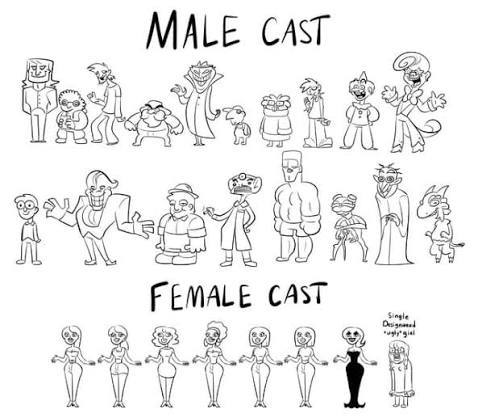
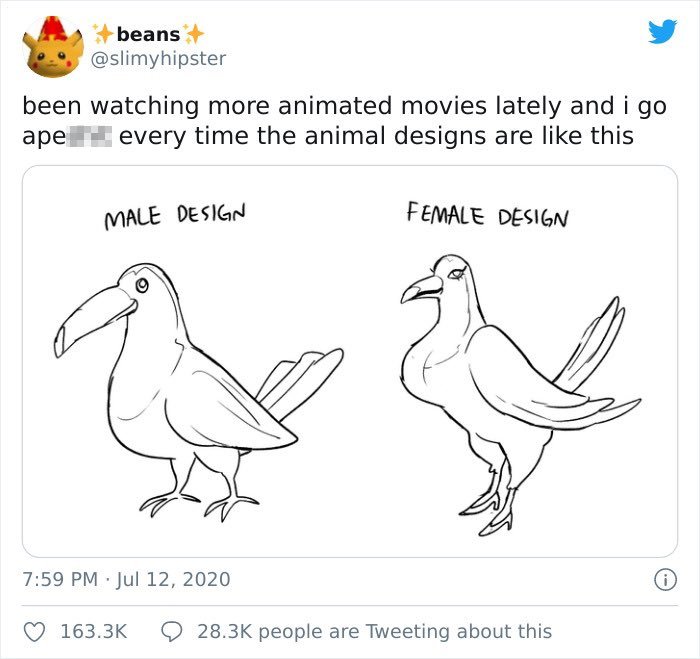
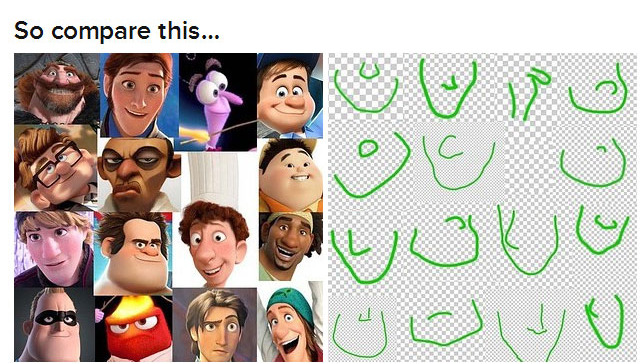
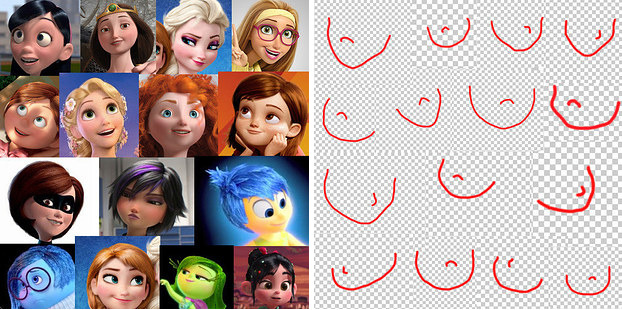
stonesense: this is going to make me sound insane and nitpicky but do you ever feel like sometimes in fanart when people draw male characters they go out of their way to capture their unique facial features and then when they draw female characters they draw like a generic woman face and call it a day


13 October 2025

stonesense: please ignore how i started this post i’ve been vindicated by everyone in the notes and i now feel confident enough to say i am not insane and nitpicky and also we should attack people with hammers


13 October 2025

lesbianzombie: we shant forget the ancient texts


16 Oct 2025

mamalaw1021:


And my reply from 22 October 2025:

This is one way that Don Bluth wins. The bar is in hell but he's hopping over it most of the time. I'm going to do a breakdown of every female character in Thumbelina first, because wow there's a lot of them, and they are VARIED--and not just because most of them are bugs! But also MOST OF THEM ARE BUGS!! That's incredible.

Credits: all screencaps from Thumbelina are from here. They have screencaps of most animated films, they started with Disney and expanded from there. They do have all of Don Bluth, in case anyone after me wants to add on with other Don Bluth films. I can only do Thumbelina bc that's the movie I have memorised, so I know where to look. Anyway let's get started!

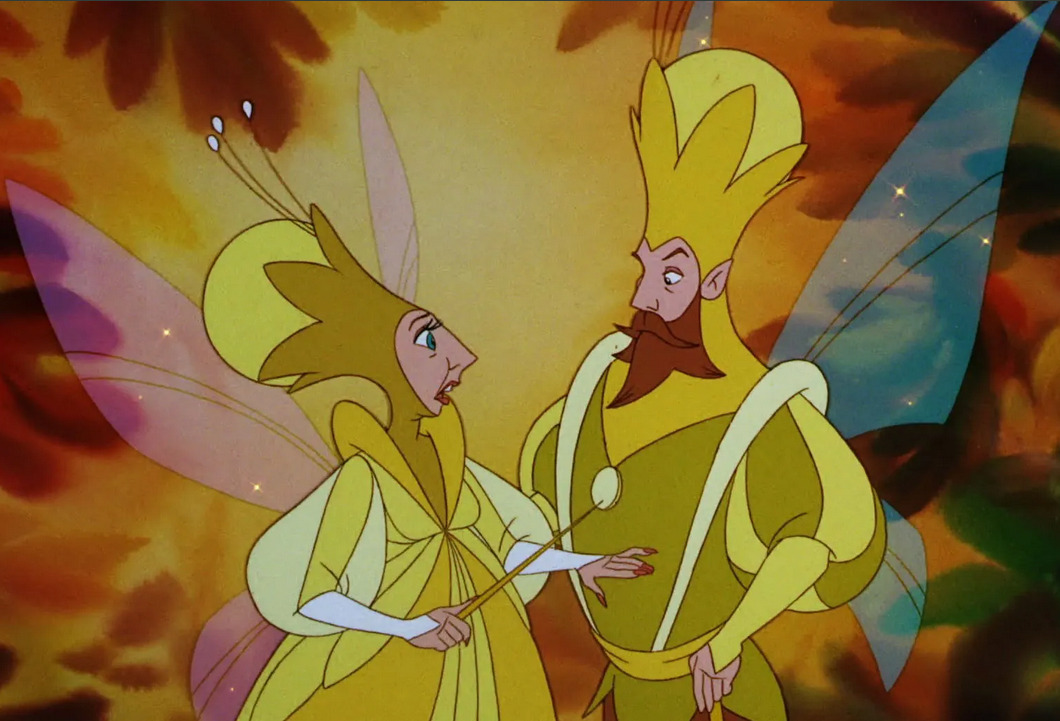
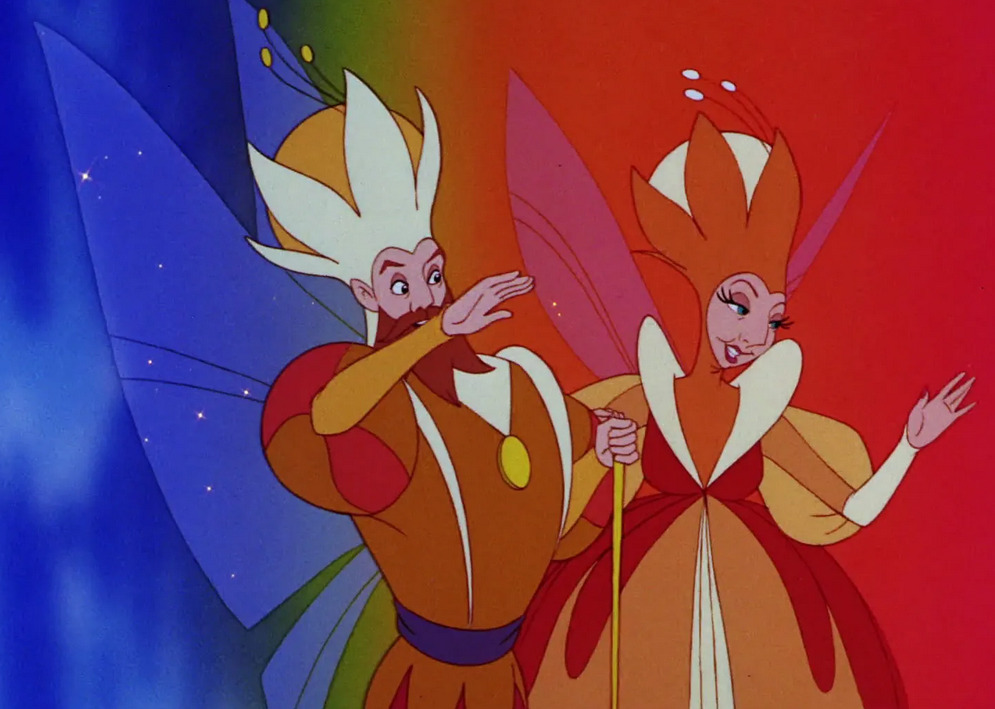
While Thumbelina looks very "disney princess-y", the Queen of the Fairies has quite a wonderful, striking face:

And as you can see, her crown is basically the same as the King's!

This is a doe rabbit:
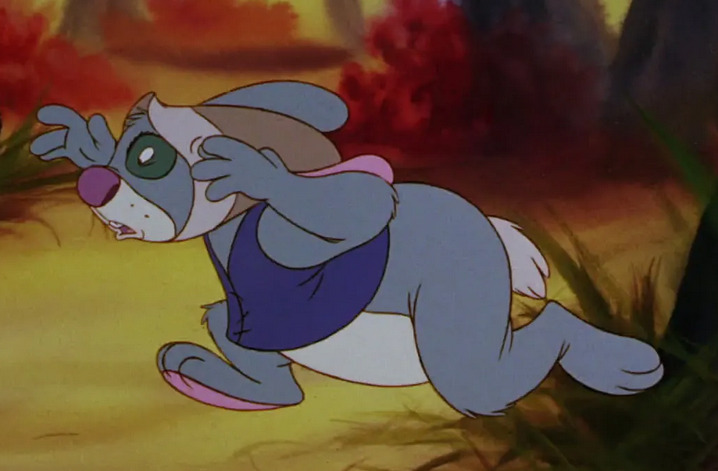
And all through the movie, the female characters are just as cartoony as the male ones. It's great! One of the reasons I love this film. And you can say what you want about how much "Don Bluth loved a fat MILF with a big rack" but that isn't ALL his female characters, either. He knows how to draw the typical pinup, which to me proves it's a CHOICE, that it's on purpose when he does something like this:
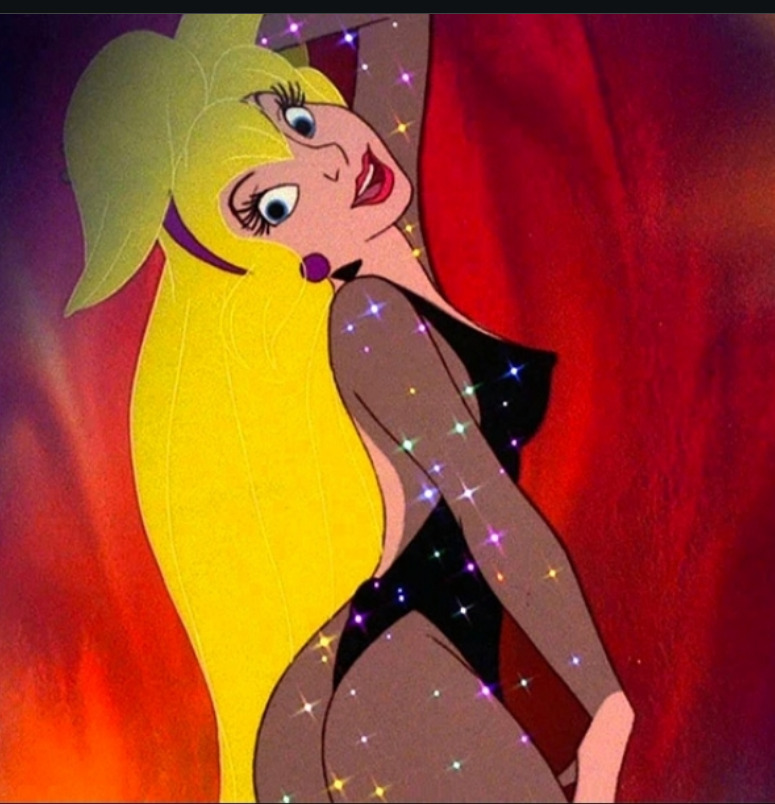
and not just "this is the only kind of woman he can draw". (The above is Princess Daphne, the McGuffin from the ARCADE game Dragon's Lair in 1983; Don Bluth did the only cel-animated arcade games ever made).

Okay, let's get back to Thumbelina: What gender do you think the biggest bird is?
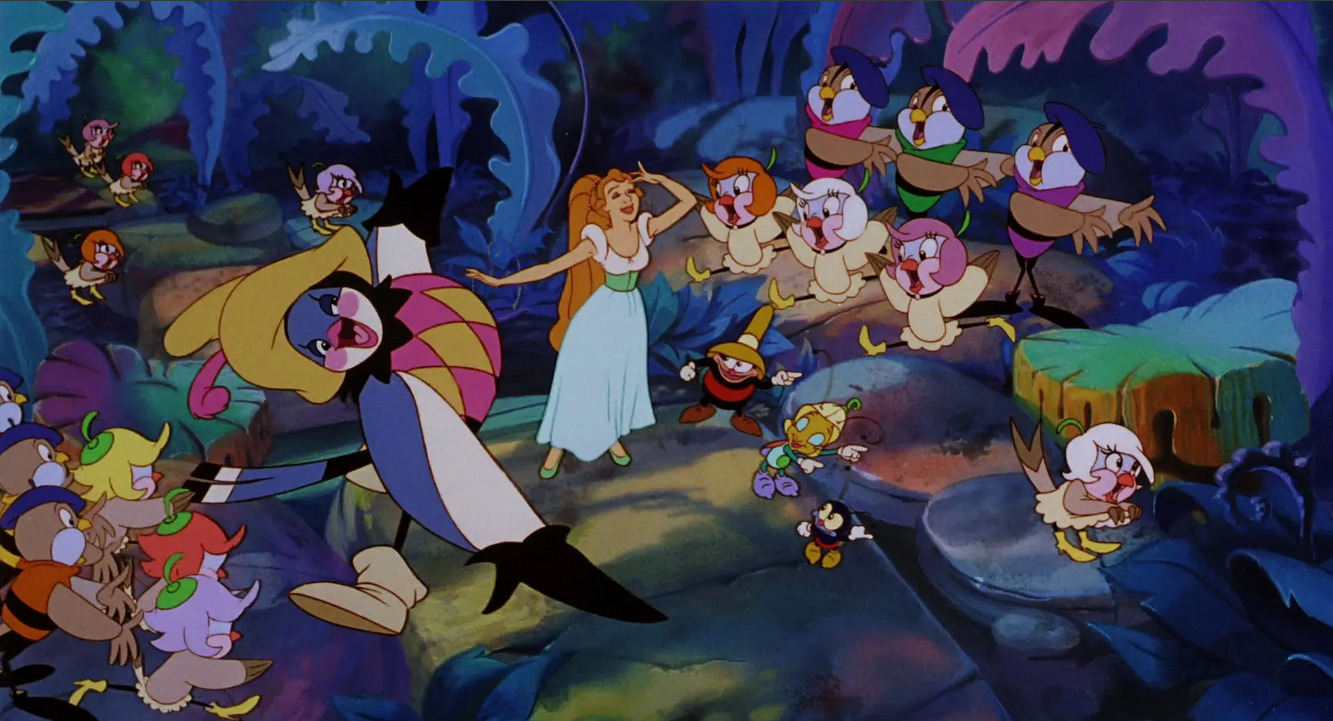
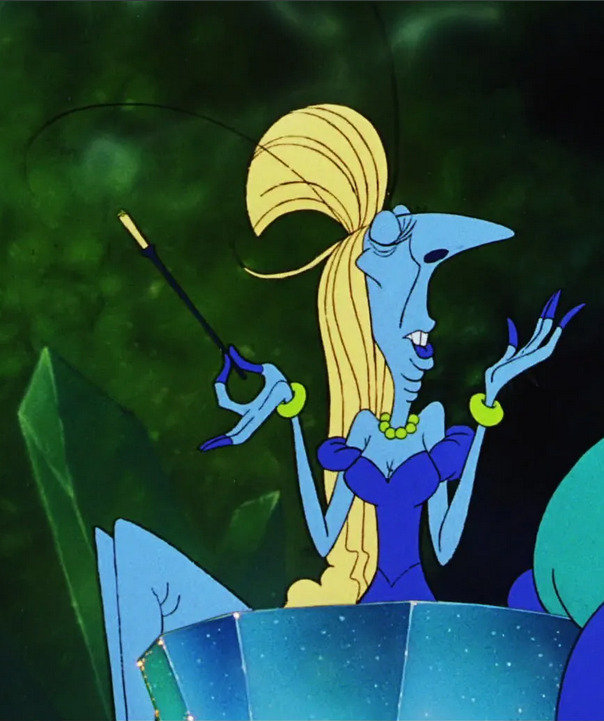
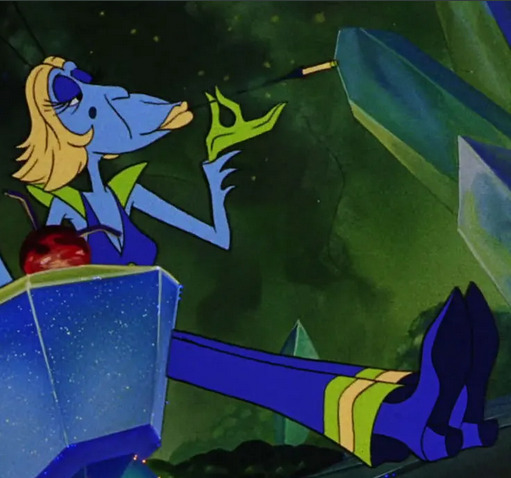
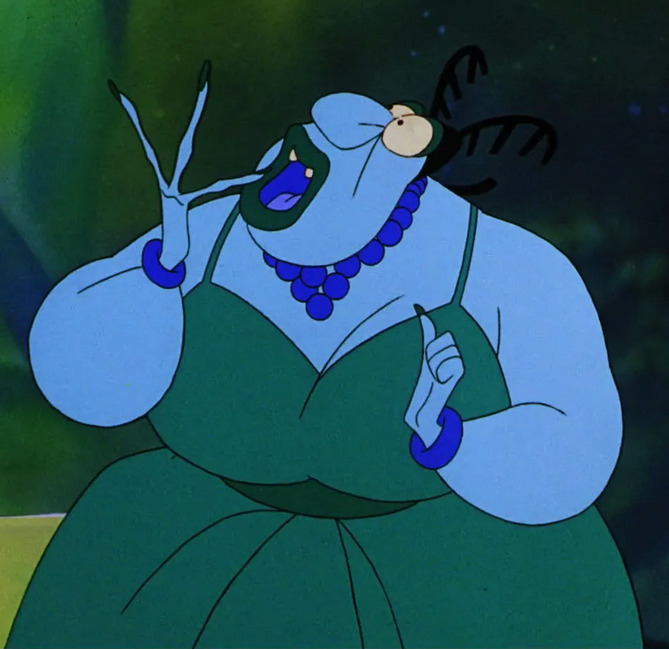
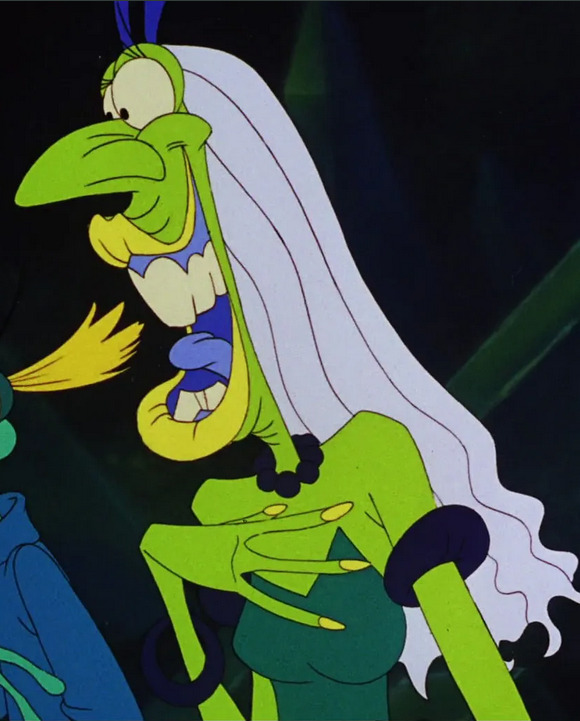
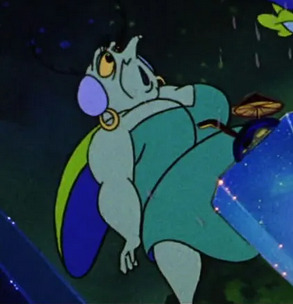
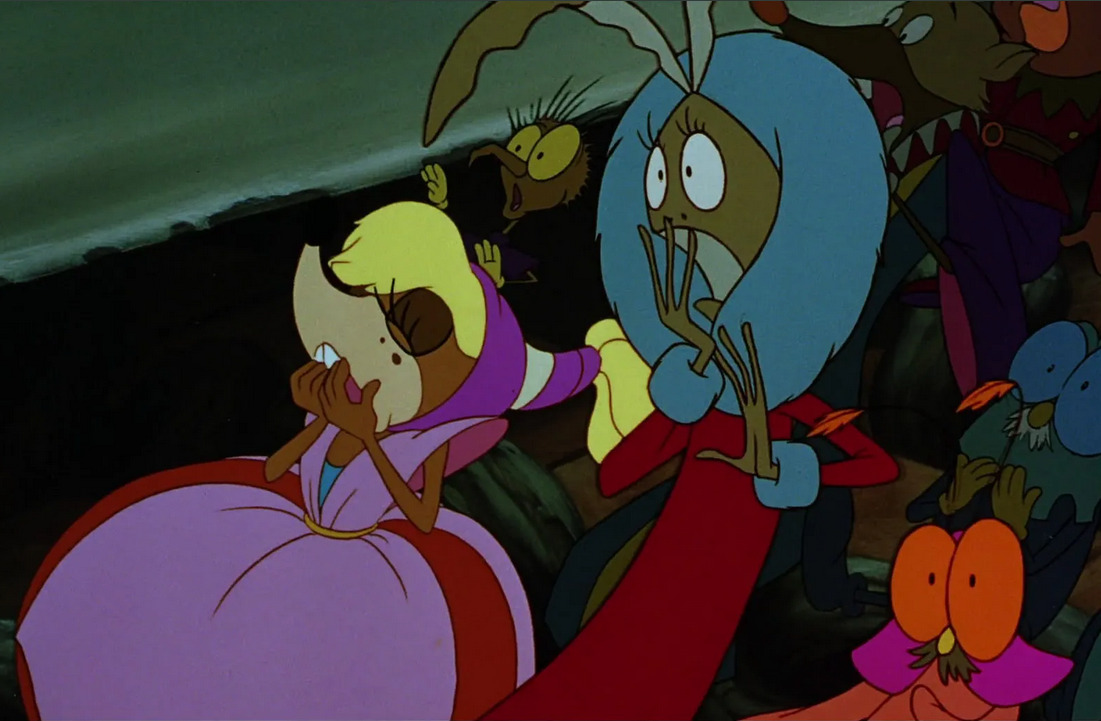
Did you guess "boy"? That's Jacquimo, the Harlequin swallow!! Also check out how the chickadee can-can dancers don't have titties! (did I mention this movie technically takes place in the French countryside?) Anyway, here's some more female characters from Thumbelina. First up, The Jitter Bugs!:

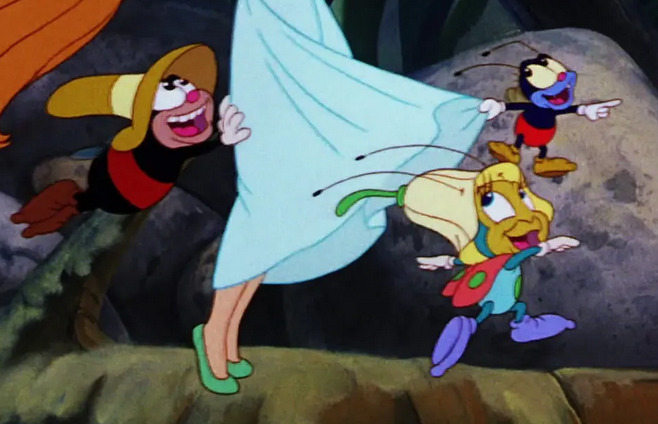
It's hard to get the little girl Jitterbug singularly, but she's the one in the red cape. Side note all the jitterbugs are based on not real bugs but bugs from early animation, particularly Merrie Melodies. Here's a big shot of not just the Jitterbugs, but Mr and Mrs Fish as well, the female bugs have pretty much the same faces as the males:
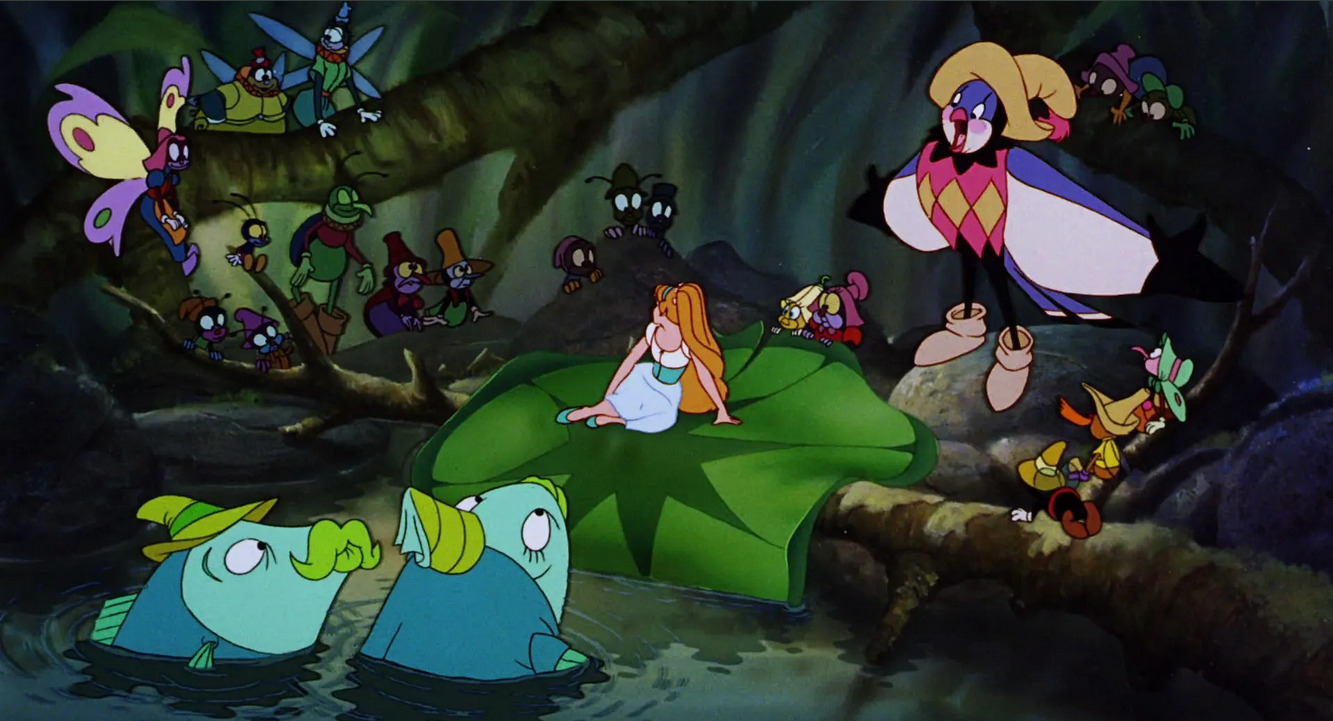
Here's a better shot of the Fishes:
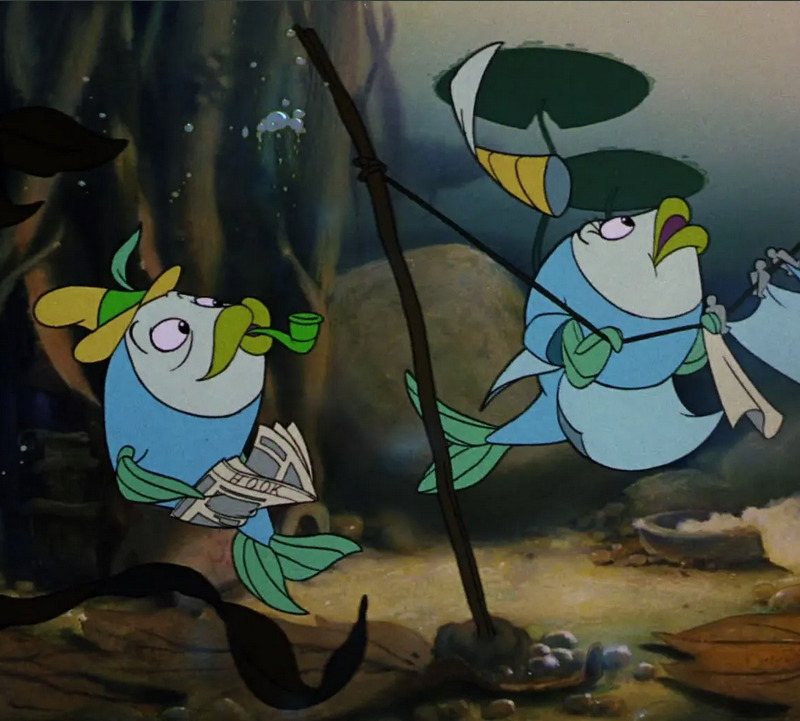
And you can see a female snake, fish, and frog in this group shot:
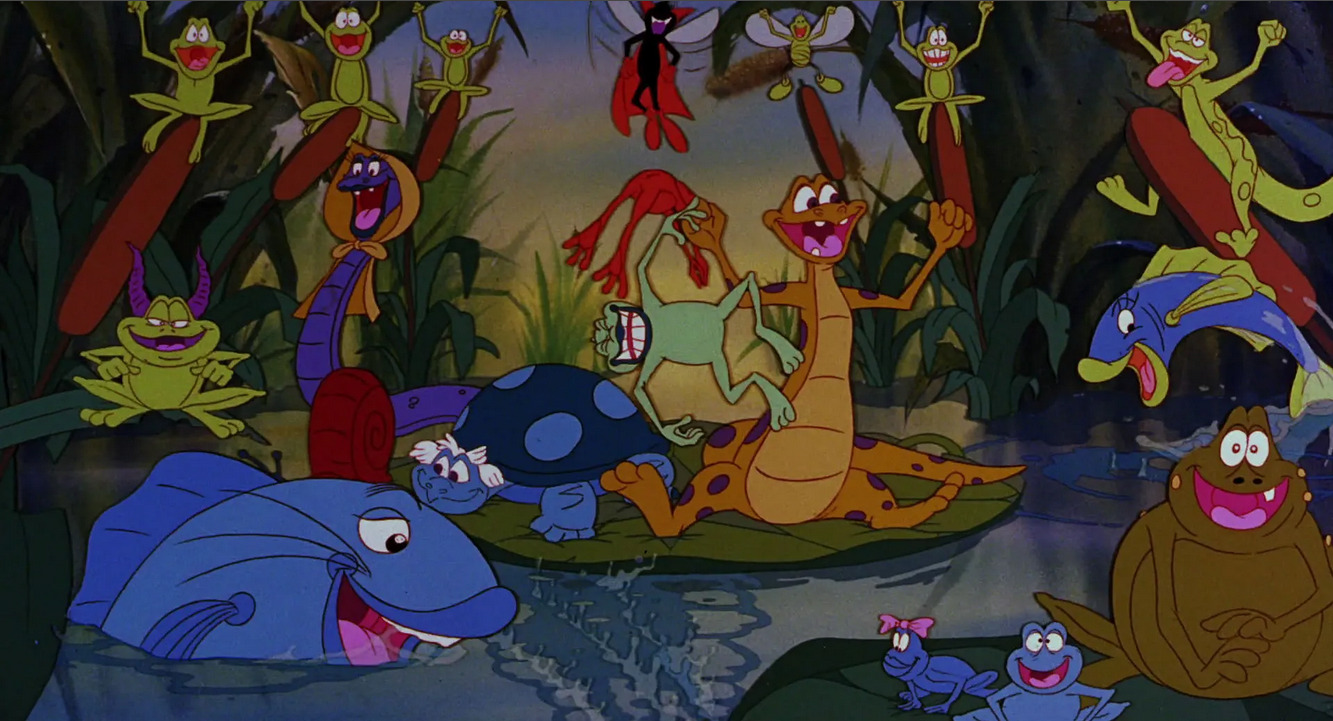
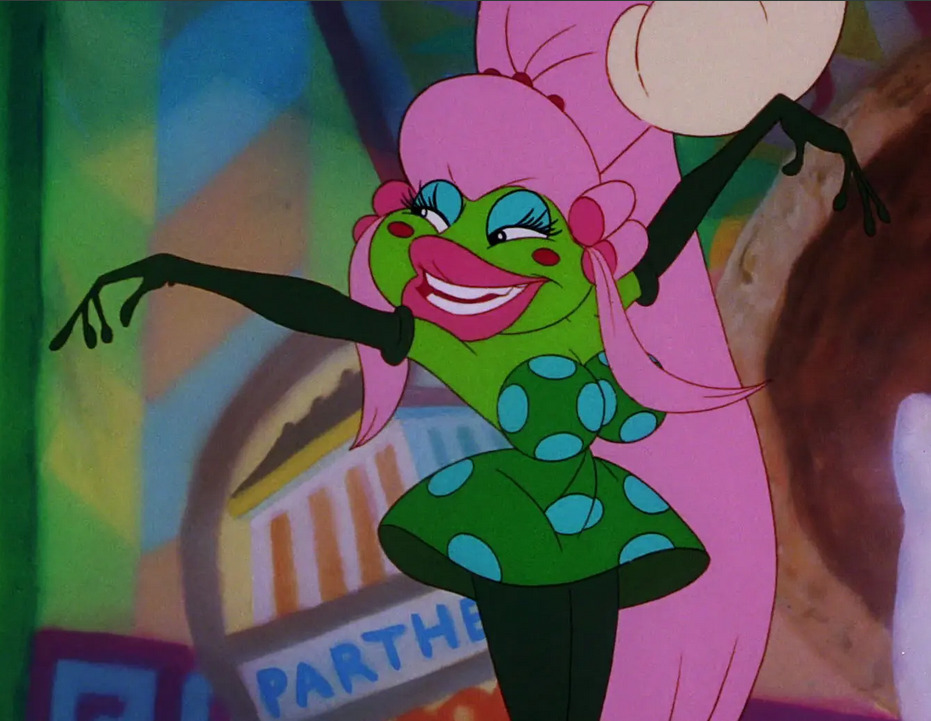
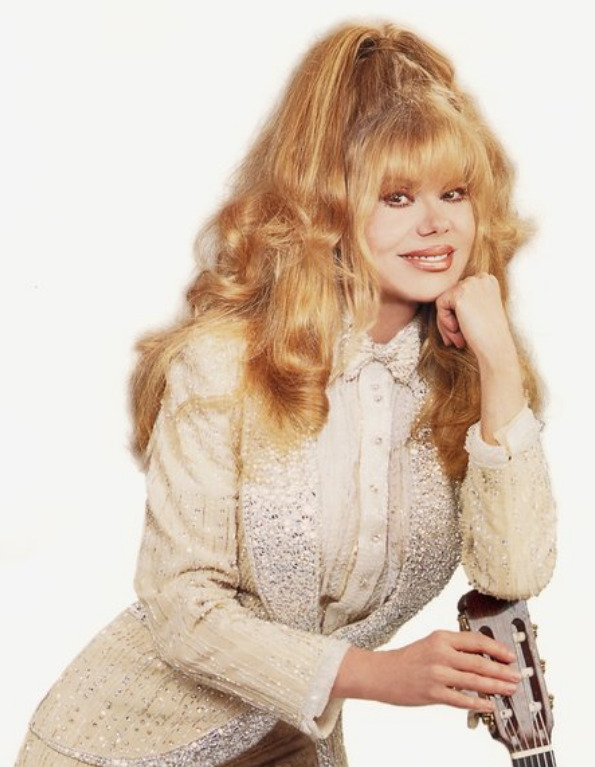
Mrs Toad can be forgiven her character design, because her voice actress is Charo, and the design is meant to look like her, and yes Charo was known for her titties as well, I just can't find a good photo that showcases the signature hairstyle and the titties.

And the sequence below is an homage to The Ugly Bug Ball!

Notably, in this sequence, our Princess heroine gets called UGLY, because the bugs have different beauty standards than humans!

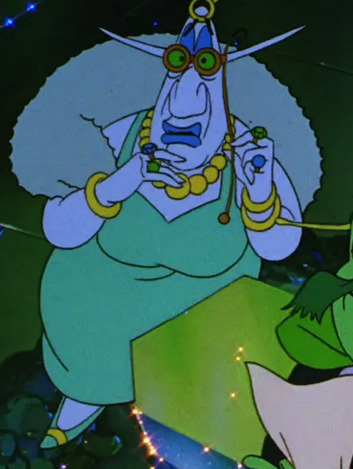
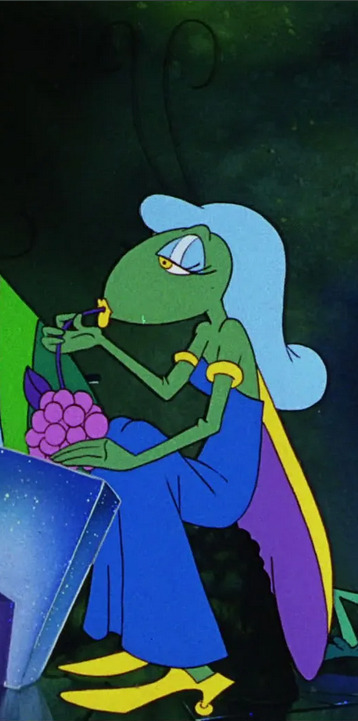
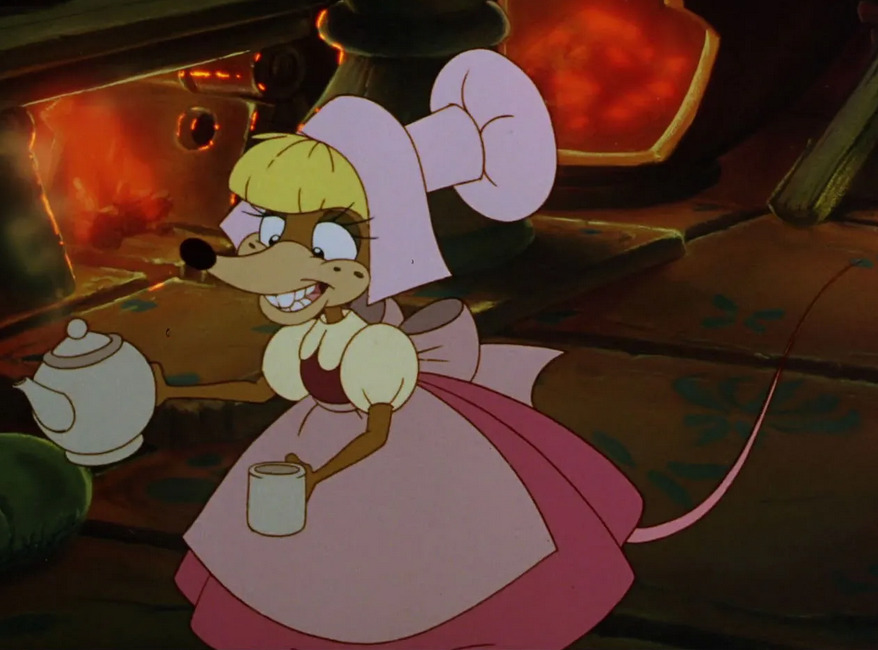
Here's Mrs Fieldmouse:

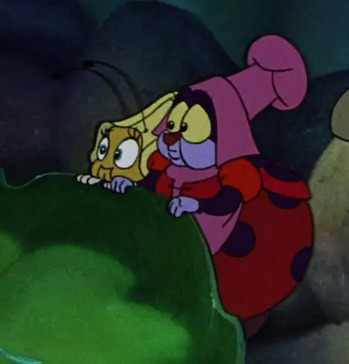
(I'm not sure what species of thing that is beside Mrs Fieldmouse, it looks like a bug lady of some kind.)

The three French Hens and oh my god I just now got the joke:
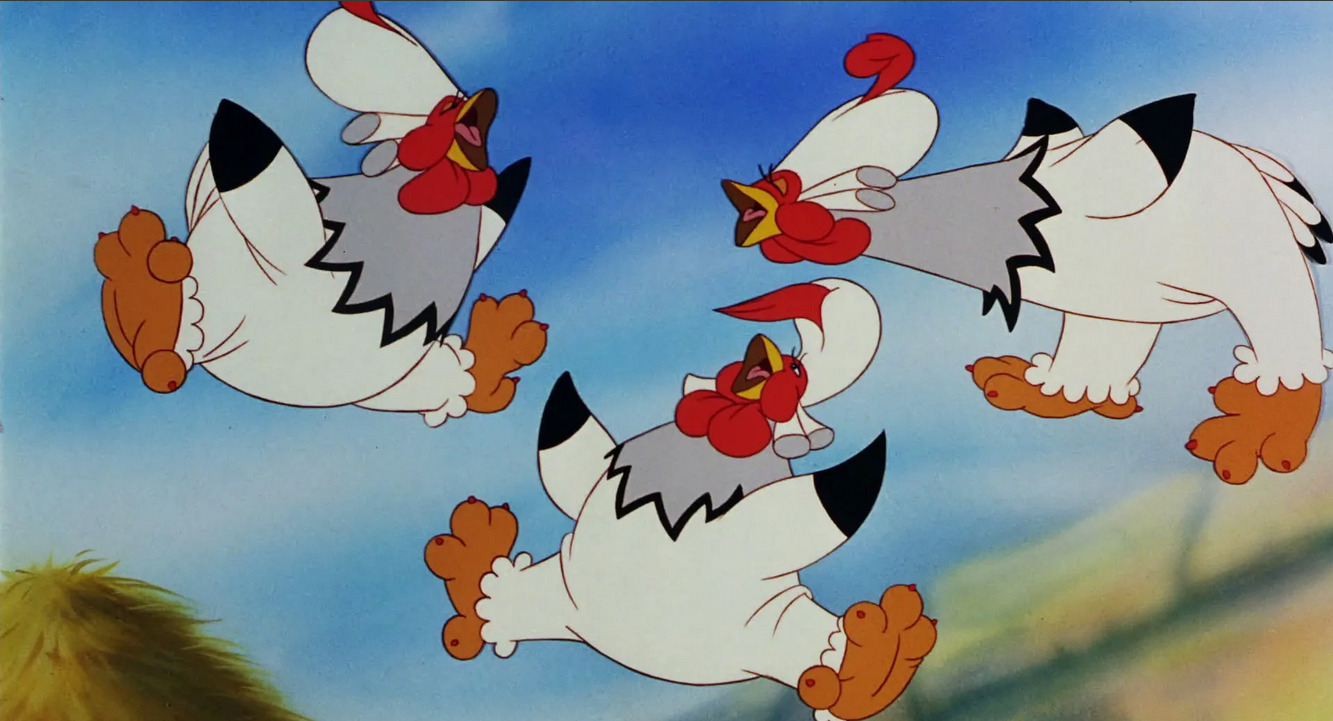
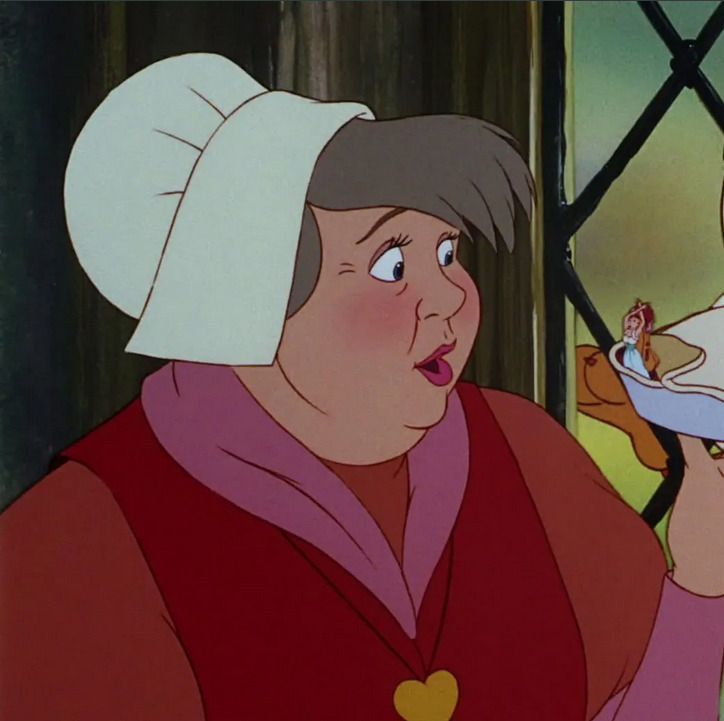
And, finally, Tumbelina's mother, the only human in this movie (and she has no name other than Mother), is allowed to be fat and have a double-chin:
So yeah, that's I think every female character in the film. Oh, whoops, I forgot one--Thumbelina!
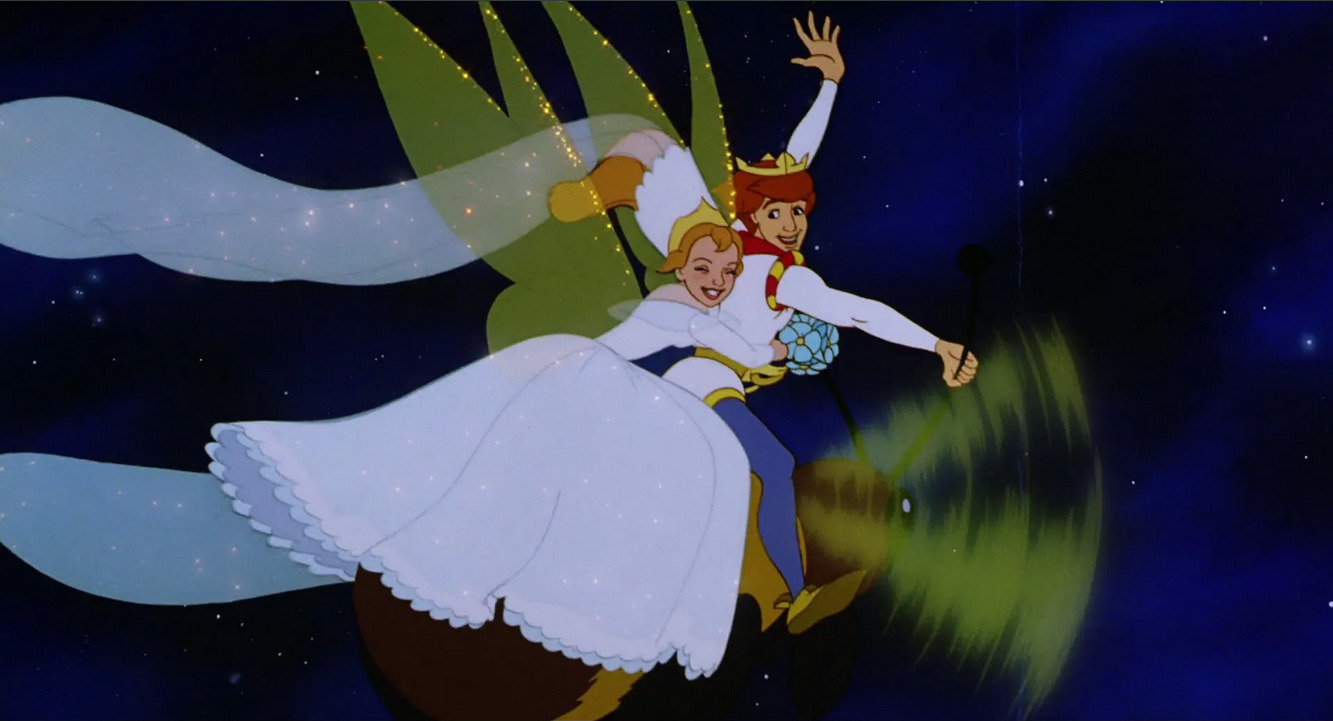
  

Ok so like, WHY. Why is it like this NOW, when Thumbelina came out in 1994? What happened? What changed? Well, it's a combination of things. Let's get into it.

First, Hollywood execs are VERY thin-skinned, and not used to knowing what every single audience member thinks. It used to be that the only way they could tell what the audience thought was ticket sales and focus group screening questionnaires. With social media, everyone can leave a review for a movie, everyone can make their review public. That's a lot of opinions. We all who live on the internet, and some of us who were raised here, know how harsh and opinionated and mean the internet can be. Well the execs don't. They're not used to it. They're delicate.

Plus they, ALSO, were not aware, UNTIL the internet, of Rule 34.

In fact, NOBODY knew about Rule 34 until the internet happened. See, the internet is a very interesting place. It's everywhere and nowhere. It's a huge, huge amount of people, more people gathering in one "spot" than ever before, and so a few truths--which have always BEEN--were suddenly visible. Like Rule 34. Gather enough people, and you start to realise that everything is a kink to at least ONE person. But you need to gather up millions of people in order for Rule 34 to consistently prove itself. Nobody knew about it until the internet, and the Hollywood execs and media censors I mean MPAA didn't know about it until the past 10, maybe 15 years.

So Hollywood panicked. PANICKED, are still panicking. They really do not know how to deal with audience doing more than just being empty vessels that dispense money as their only form of having an opinion or free will. They don't understand that you cannot control Rule 34, it's not a rule we agreed to, it's a scientific theory sort of rule. It's like gravity, or inertia. It just HAPPENS. They don't get it. And they try and control it. And one of the ways they control sexuality is controlling women--I mean, female characters.

But this isn't just a CGI thing, this is a fight that's been going on at Disney for years. Eisner and Disney generally find Jessica Rabbit "too hot" and that is why there's very little merchandise of her or of the film (since she's such a huge role), and why they will never greenlight more Roger Rabbit films. So this isn't new. Women who have flesh that jiggles or heaves or is at all ANYTHING is "too hot". Even in adult animation, when was the last time you saw a woman's body jiggle except when that's the entire focus of a gag?

But in recent years, there has been even more panic surrounding how female characters are viewed. E-surance stopped using Erin after they found out people thinks he's hot. Wow, imagine that. People think a character designed to be attractive is attractive. But it got worse the longer the internet was around, and that eventually even led to nasty things that made it EVEN WORSE, like FOSTA-SESTA in 2018.

But you can't stop Rule 34 any more than you can stop children liking repetitive annoying songs. It's just a rule of humanity. People have kinks. But that coming out publicly and being known? That just threw into stark light how incredibly puritanical Hollywood still is about sex. Particularly animation, which is seen as "for children only", the idea that adults might find animated characters worthy of porn is idk terrifying? To the sort of person in control of what female characters look like.

There's also this weird reaction to demanding female characters be more than just princesses and pin ups. That's a reasonable demand, but the reaction to it from Hollywood was so incredibly deranged. "stop making women all thin hourglasses with tits and ass, women come in more shapes than that" well they heard the first part but ignored the second one. Feminist Character Designs have NO titties and NO poofy lips! No makeup! Short hair! No fat! Nothing objectionable! Nothing sexual! You can't possible sexualise a woman without any of that, right?

Rule 34: Oooou MILF with the dumptruck ass!!! Hawt!!!

Hollywood: WELL WHAT IF NOBODY HAD ANY CURVES AT ALL?? SURELY THAT WILL FIX IT!!! #Feminismwin!

Rule 34: Haha hold my beer.

So mostly, the Puritanical USian attitude that we not only can but SHOULD control people's sexuality, that people SHOULD NOT HAVE SEXUAL FEELINGS AT ALL EVER IN RESPONSE TO ART is what is driving this, as is the frankly utterly naive non-understanding of the CULTURE of the internet, and of the FOURTH WALL. Even Hollywood has forgotten the fourth wall was there to protect THEM from US.

AND, added to all of this, there is the element of vulture capitalism, of the "profit must grow every quarter or you're failing", of "we have to appeal to the lowest common denominator" (thanks disney for setting that shitty standard!), and of animation being seen as being for younger and younger audiences as we adultify children younger and younger by various means, including but not limited to: viewing children existing outside as criminal, loitering laws, helicopter parenting, school shootings, and other systemic abuses of children.

I will not go into detail but I will mention here also the rise in Fundementalism and the fact that Hollywood could suddenly hear about those nutjobs and that the nutjobs could talk to one another and organize bullshit but that makes me very angry to think about.

It is all of these elements, TOGETHER, that have created this problem.

This is very long so I am going to close with:

You can't have good art without there being something sensual allowed. Art depicts all the aspects of life, including the flesh. If you eliminate the fleshy aspects of life, you eliminate all that makes something visually relatable and appealing to look at. You eliminate the ability to caricature, which is a staple of animation. People are not sexless plastic dolls. People are made of meat. Art needs to be made of meat, also, if you catch my meaning.

aetherograph: A black demon in a pink button-down shirt. His head is a floating cube with pastel pink and green sides and sfour strange eyes asymmetrically placed on two of the sides. (Default)
When you're familiar with a few elements contributing to the problem, the way Techbros talk about AI starts to make sense. But you have to know what's contributing.

1. The sorry state of schooling


So this is one that a lot of people are familiar with, because most people went to public school and witnessed first-hand the horror of it. But I'm not just talking about public school; I'm talking about pedagogy, which is the word for what method you use to teach students. With one exception, all pedagogy is based in religion or other non-scientific worldviews. I like to call this the "world of should". The world SHOULD work like x, people SHOULD work like y. Well they don't. The "teacher lectures, you take notes" model has remained unchanged for thousands of years--despite huge developments in the fields of psychology, child psychology, paediatric and adolescent health, and other fields that you'd THINK would be relevant to pedagogy as they are about how people, including children, learn.

What's the exception? Montessori. Dr Montessori used evidence-based science to design her curriculum, and developed and improved it using more and more of that throughout her life; after her death, the schools for teachers and the associations that use her methods improved on them more using the same evidence-based science. There were still other schools that didn't use her entire method, only taking bits and pieces--those schools, like Waldorf for example, often try to associate themselves with Montessori, but they are not accredited and do not have the same rigorous training given to Montessori teachers, nor do they base their pedagogy on evidence-based science. They just use different, newer religious beliefs to fuel their pedagogy--usually New Age type stuff.

If you've never BEEN to a Montessori school, you don't understand the difference here. If you were raised inside a religion, you do not understand the difference here. Montessori centres the child, and puts into praxis the concept of children having human rights and being full persons from birth, and Dr Montessori advocated for children's rights for her entire life, making it a part of her address to the first meeting of UNESCO. Though a Declaration on the Rights of the Child had been approved by the League of Nations in 1924, and was even displayed in every school in France, it didn't change the way children were educated. Dr Montessori started her career being given the class of disabled children that the school she worked for had given up on--this was not a woman who started her career with children that everybody found easy to teach or even love, but with those of us who are even now often given up on, abandoned, and forgotten in institutions. She started with us, disabled kids. Special needs kids. Montessori is ENTIRELY based on what works for EVERYONE.

And what is that? Well, play. Showing children how stuff works with models they can touch and manipulate and interact with. Cooperation. Mixed age groups. Peers being allowed and encouraged to teach peers or youngers (or olders!). Teachers not being authoritarian figures but helpers who encourage children to have their own opinions and ideas. Children taking care of their own classroom together by sharing chores they are taught how to do.

You are taught how to do EVERYTHING, in Montessori--and if you're struggling, you can ask for help and get it! There is no homework, you do things in the classroom where there's a teacher available or a friend to help you if you need it. There is a great value placed on teaching children how to be persons over teaching x amount of math and testing. So, you learn not just what you're learning, but also how to teach and explain it to other people, and that you have a right to get help and that your fellow people in this world are friends to work with, not enemies to compete with. You are given enough support that you can struggle but also get help, and know the reward of finally grasping a new thing.

You learn, in a word, how to be human.

Contrast this with the way we encourage competition from birth in other schooling, we punish children for deviating from the lesson plan, we punish them for falling behind, we punish them for speaking, we punish them for having the wrong answer, for asking for help, for not knowing, for knowing too much, for questioning, for exploring. We punish, punish, punish! It seems the thing a shocking number of adults hate more than anything in the whole world is children. Is it any wonder that Matilda is such a favourite book?

We also teach them that other people are enemies. We do this by separating age groups strictly, having grades, large classroom sizes, and most work being done at home; and punishing children for trying to help one another in the classroom. We also treat abuse as a separate totally fine thing when kids do it to other kids. We have a word for it and everything: bullying.

Children do not learn how to learn. They don't learn how to teach, or explain what they know. They don't learn that other people know things they don't, or have experiences they don't, that their experience and perception isn't universal. They don't learn the reward of learning or getting better at something after struggle.

2. Devaluation of the Arts and Absence of Public Art in most of the US.


Take a look at a photograph of Paris or Florence or Mexico City. Right away you'll notice there's a fuckload of art everywhere, from street performers to statues and architecture. Now look at the average US city. Nothing. The buildings don't even have ornaments, most places. It's just boxes and signs and advertisements--which don't contain art anymore. Sure, some cities have one big piece that's famous--the Bean for example, or the Arch, or the Bridge or something like that. But these are huge structures in a desert of boxes and ads. But it goes farther than that, that's only a symptom of the problem.

We don't value art, in this country. We don't think art is important. For all the entertainment we make, it's just that--entertainment. It's made by people only interested in making money, rather than being made to say something, or to decorate something, the way that Art is. You can see Art happen despite these mercenary goals, but that art has a huge price tag--I recently went to see a touring broadway show, and it cost me $400 and driving about 2 hours. That art is not available to everyone, and as progressive as Broadway is in comparison to Hollywood, it's not nearly as accessible as movies. And while community theatres exist in MOST communities, they are poorly funded and not well-patroned. People just don't go see a play on a saturday night the way they see a movie. We don't give the arts funding, we have been drumming STEM STEM STEM into kids heads for a couple decades now, all while media has gotten easier and easier to not pay for, making it seem like it costs nothing to make.

If you aren't taught what art IS and the history of humans making art, and the reason humans make art, you're not going to know any of that. If you aren't given opportunity and instruction on how to make your own art, you will never know how much effort and skill it takes to make art either, and will have no sense of context, no ability to analyse, no ability to engage with art in a way that values it. With how art is simply not taught at all, kids are limited to whatever they pick up from the world around them. Sometimes they get lucky, and live in one of the few places in the country that has a lot of art, or they have parents that value art and know to show them art and talk with them about it; but leaving it up the chance means a lot of kids are stuck growing up in ugly places devoid of not just art but natural beauty.

3. Zero psychological education for the masses.


Do you know what therapy actually does? No really, do you know what a therapist is supposed to do for you? None of us really get told what it is we're supposed to expect from therapy, and that means we have very little idea of how to tell a good therapist from a bad one.

Therapy is a class to teach you about how brains work and teach you skills for how to manage your thoughts and emotions. That's it. It's a class. A therapist is a teacher. And most of those skills and ideas are those that we can only access if we go to therapy, even though they're skills that we need to navigate life.

One of these ideas that most people do not have is called Theory of Mind. Theory of Mind is the idea that your experience of reality is not universal, that YOU are different from OTHER PEOPLE. That YOU know things OTHER PEOPLE do not, and OTHER PEOPLE know things YOU do not. Other people may be feelings things YOU are not. YOU may be feeling things other people do not. Etc etc. It's the first thing the therapist has to teach most people.

This is just one of many, many things that people should be taught from birth, other examples being: how to de-escalate, how to understand emotions, dealing with trauma, advocating for one's rights, understanding boundaries, communicating clearly with words and body language, and on and on. Things that we are ONLY taught if we go to a therapist, which is often behind layers of barriers such as money, time, and shame.

4. We do not value play, fun, or hobbies.


Do you have a hobby? Most people my age and younger will say they don't have the time, or will say they like "watching movies" or "listening to music" or "hanging out with friends". These are not hobbies. A hobby, to quote Bob Ross, is an applied interest. A hobby is something that requires some amount of skill-building, such as knitting, making model planes, or playing the guitar. Most hobbies are some form of creative skill, or employ creative skills in combination with social activity (such as the SCA, Camping, or playing soccer).

Having a hobby requires time and money, which most people no longer have; even kids from rich families do not have time in a lot of cases, because kids have been pressured more and more academically and have been burdened with more and more homework as years have gone on. I hear now that it's getting to where kids are given so much, in some places, that it is not humanly possible for them to get it all done and still get even one hour of sleep. And most adults are working 2 and 3 jobs just to barely scrape the rent and car payments together, if that. "Nobody has time for hobbies" is seen as sad, but not catastrophic--after all, hobbies don't teach you anything useful.

Well, they do. They teach you to practise a skill and show you the reward of getting better at something that is hard to get good at. They teach you the value of struggling through being bad at things, and how in order to get good at something, you have to enjoy the process of doing it, not being good at it but just doing it at all, whether you're bad OR good. They're very good for stress and I would argue they're a form of play, they often create art, and play and art are the whole point of being in a society.

5. Toxic Masculinity


Men are denied friendship. Friendship requires vulnerability, and men are not allowed to be vulnerable, that's sissy stuff. So men don't have friends, and they don't know how to make them, and they don't tell the friends they have that they consider that person a friend, and they don't know how to maintain relationships, and on and on and on. Men are not given affection past a certain age, because 'you're a man now'. Men are not allowed to cry past a certain age, because 'you're a man now' and so on. This results in men who are socially malnourished and starving for any form of affection, because they're told the ONLY person they can ask for affection from is a sexual partner and that the ONLY form of affection they are allowed to have is sexual gratification. And then we throw them a further restriction that they're ONLY allowed to have ONE partner.

And then they just create feedback loops that reinforce all of this. But if you isolate someone like that, and malnourish them, they're gonna get really fucking hostile and unstable. Like REALLY unstable. And they're gonna have some pretty weird ways of interacting with other people, that are very aggressive, hostile, and miserable. This also means that any social mileu dominated by men is going to reinforce this toxic masculinity. Places like, say, tech, which is dominated by not just men, but men who have been told they are failures of masculinity.


Ok, let's review.

The way we teach children and what we DON'T teach them, the devaluing and non-presence of art, and the lack of interpersonal and behavioural skills results in an inability to understand:

1. That your experiences--all of them--are not universal.
2. That in order to learn something, most people need it taught to them--this includes explaining the concept multiple ways, using metaphors or similes, models, diagrams, and patience to walk someone through something you already know all these different ways.
3. That there is value in enjoying the process of doing something, even if you aren't very good at it, and there is value in persisting to practise that thing so that you can improve your skills.

I have observed that, over and over, people enmeshed in coding end up in a kind of weird combination of a negative feedback loop and an echo chamber. It isn't JUST one of these things above contributing to that; it's all of them interacting with each other.

And that's why you get guys very earnestly trying to describe how cool it is to be able to create songs at the push of a button, with zero effort, and just as earnestly not understanding why anyone would actually ENJOY practising something and making the music their own self. That's why you get people who can't tell when a video or image is AI. That's why you get people who do not understand how AI is not at all the same thing as art.

AI is really highlighting the catastrophic failures that have led us to this point. But those failures started a long, long time ago.
aetherograph: A black demon in a pink button-down shirt. His head is a floating cube with pastel pink and green sides and sfour strange eyes asymmetrically placed on two of the sides. (Default)
I was able to buy tickets to see the touring Broadway production of Beetlejuice! We saw it on Thursday at a matinee.

Justin Colette is a wonderful Beetlejuice; he can tug your heartstrings with one pure note one moment, and the next one have you in stitches laughing. His energy and delivery and interaction with the audience carried the show enormously well. I know everyone compares to Alex Brightman, but I think Justin Colette successfully steps out from that shadow and makes the role his own! So funny but also there were some moments I wished the audience had picked up on were good for saying "aww" (you can't really do that one by yourself and be heard!). Oh! And I LOVED how BJ knew it was a show but NOBODY ELSE ON STAGE DID, so whenever he spoke to us, the other characters were like, "who are you TALKING to?" XD It was so simple but so funny. I had some wonderful magic moments connecting with the actor via applause or laughter. He was so good!

Madison Mosley has such a loveable Lydia, and her voice is GORGEOUS and has such power, I was reminded of Patti LuPone and Audra MacDonald!! Those trills!!! I was sobbing all through "Home"! Megan McGinnis' Barbara was so likeable, I could really tell she was channelling Geena Davis; and Will Burton as Adam was charmingly Dad-like, I think my favourite moment was his "well, I don't see any cops here" bit, so corny and funny, that was definitely the moment I realised I loved him. Maria Silvia Norris stole the scene whenever she chewed it up, I absolutely LOVED her Maxine Dean--and her Juno! My god! What a Commedia dell'Arte Padrone her Juno was! And yes I mean Padrone! Even the walk! Jesse Sharp's Charles was so perfectly the repressed WASP father struggling despite his Repressed Puritan upbringing, I definitely choked down a sob when he finally said his wife's name, all in a rush like he had to push it out before he lost his nerve! God, GOD!!!! I'm from a WASP family and when I say the REALISM!!!!!!!

Kenneth Posner's lighting design was one of my favourite technical elements, from the projection and animation of the backdrops to the fact that the house's walls were coloured with projected images. I really appreciated the way the sets handled the small Landmark stage too, especially fitting the larger puppets on the stage without seeming clunky. I was sitting in a seat way in the back and one of the purple side lights did get in my face a lot, that's the only critique(?) I have; maybe test the light directions on the wheelchair rows, techs! I really liked how the strobes were set up though, and they startled me with the lightning and thunder every time (in a good way). I also liked how the green lights rotated to point at Beej at key points, that was so cool!

I've seen a lot of theatre from professional to amateur to kids productions all thru my life and I really enjoyed this show and this cast SO MUCH! I wish I could afford to see it over and over!

As far as the Landmark itself, it had good clean bathroom facilities and they seemed big enough for the amount of people using them. I am both disabled and fat and I found the disabled seats easy to access and comfortable to sit in for the long hours, so I could focus on the show itself (it helped that they allow BIG water bottles!). Parking was only seven bucks at an ex-mall around the corner, which was a walk but not anything I couldn't handle.

There was only one bad moment when someone on the other side of the theatre from me yelled 'respectfully shut the fuck up' after the audience went wild for Justin holding a scream a really long time. I was SCANDALISED at the rudeness. Of COURSE the audience goes wild and brings the house down after an amazing bit of breath-control??? How dare you tell us to quiet down!! People started leaving before bows too

Overall, though, the audience was pretty... quiet? Like... too quiet. But that just meant my knowing what I was supposed to do was noticed more by the actors--thank god I was all the way in the back of the orchestra pit, I'm so shy! I like to interact but only via applause or hooting or laughing etc. Just the regular kind of audience noises.

aetherograph: A black demon in a pink button-down shirt. His head is a floating cube with pastel pink and green sides and sfour strange eyes asymmetrically placed on two of the sides. (Default)
All of these are free to use and reproduce in any variation as long as you can blazon it the same way (I will include the blazon, or formal heraldic description, under each flag). The shades of colours and the execution of the blazon can all be variant. As long as you can recognise it at the size of a postage stamp OR twenty yards away in the rain, it is correct.

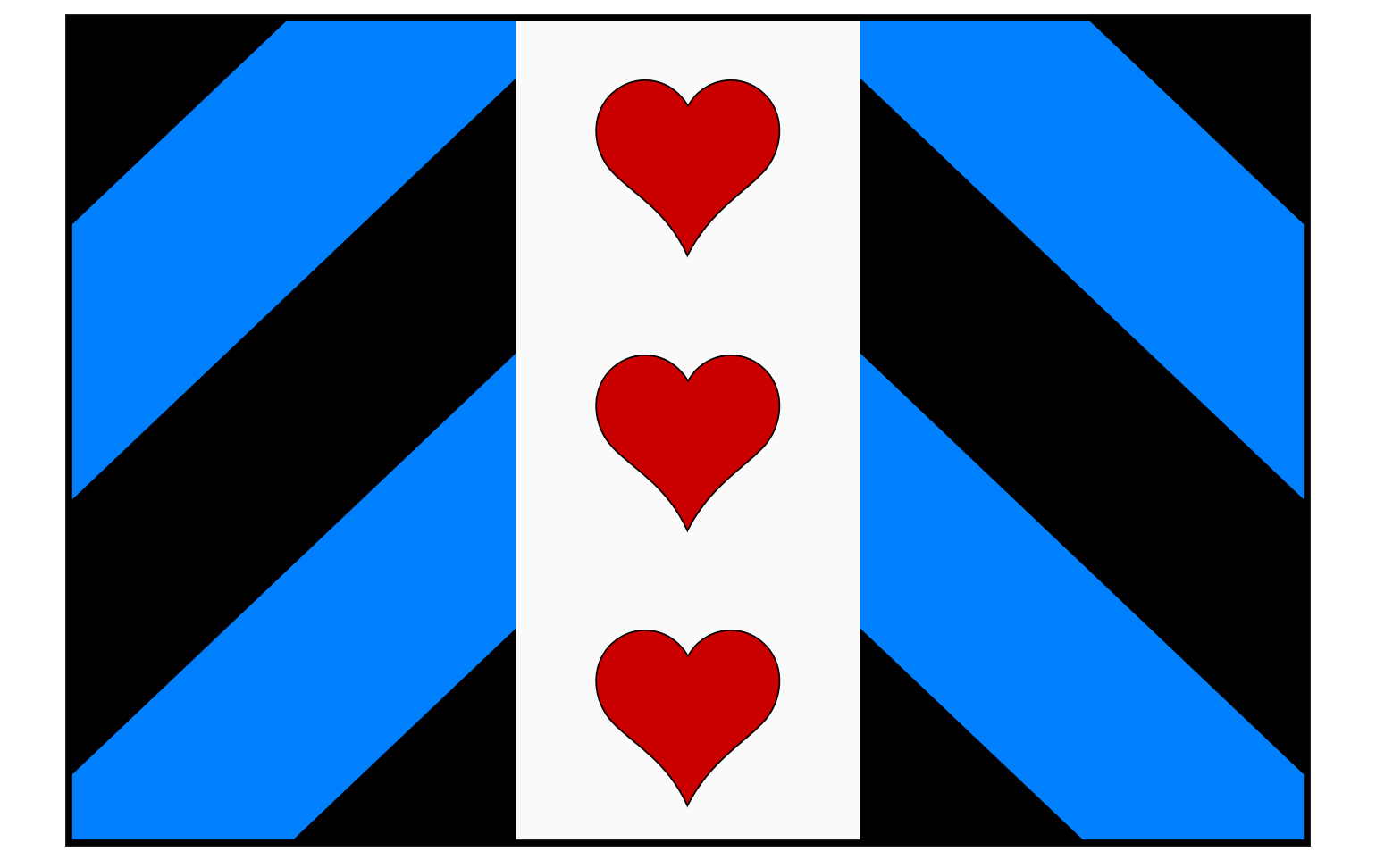
Leather/Kink General:


A field chevronny sable and azure, a pale argent, on it three hearts gules.

I re-arranged the stripes of the leather flag, and made it three hearts instead of one because of the many triplicate concepts in kink: top/versatile/bottom, dominant/switch/submissive, safe/sane/consensual (nb: there is criticism of ssc by the Mad community, as well as those with kinks that cannot be made safe. However SSC is still a part of the community and the discussion about it is a good thing!)

Polyamory/Non-Monagamy


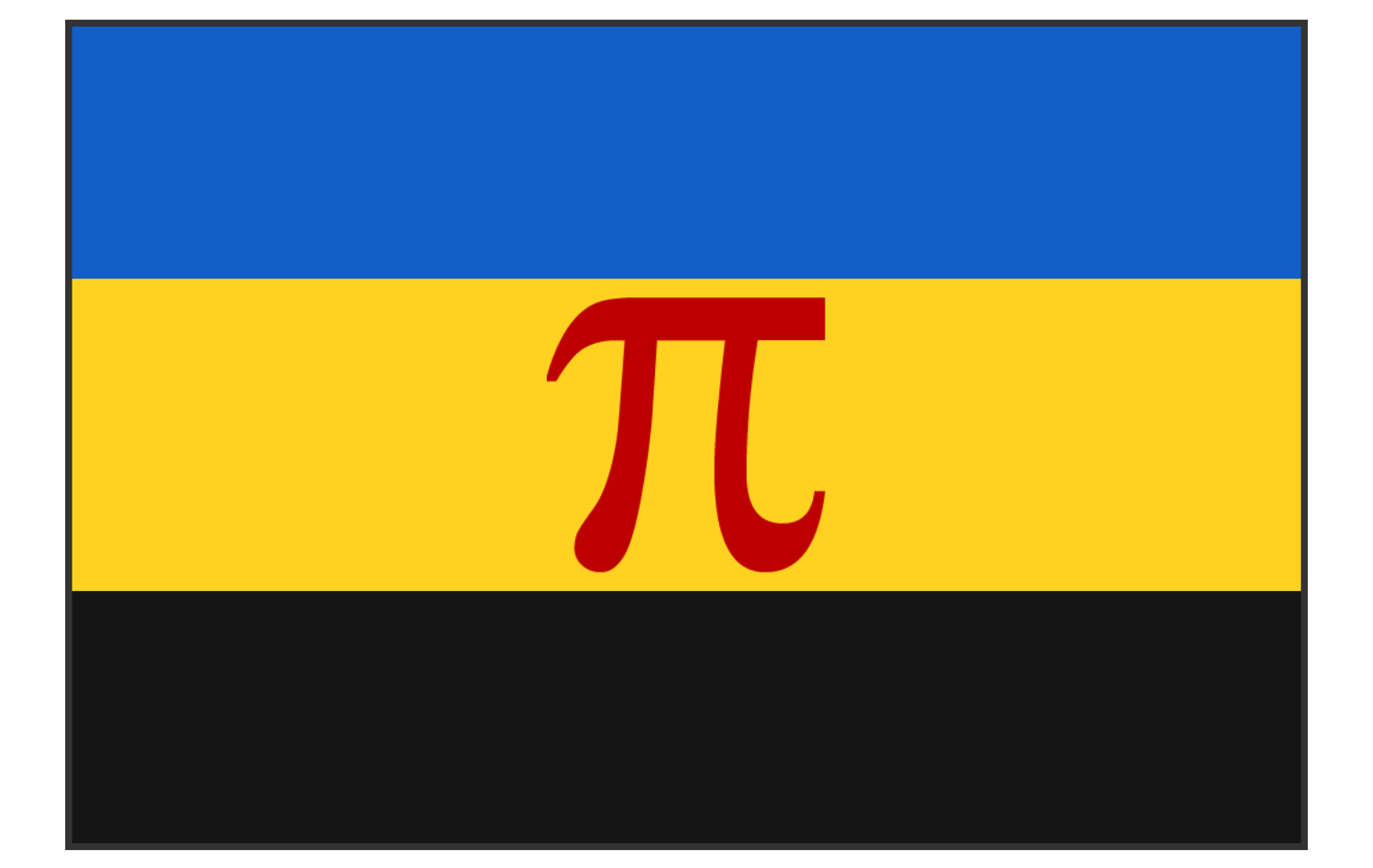
Blazon: A field per fess azure and sable, a fess or, upon it a pi symbol gules.

As you can see, all I really had to do with this one was flip the colours of the fess, or middle stripe, and the pi symbol. Now it has higher contrast and is easier to see!

Transgender Flag


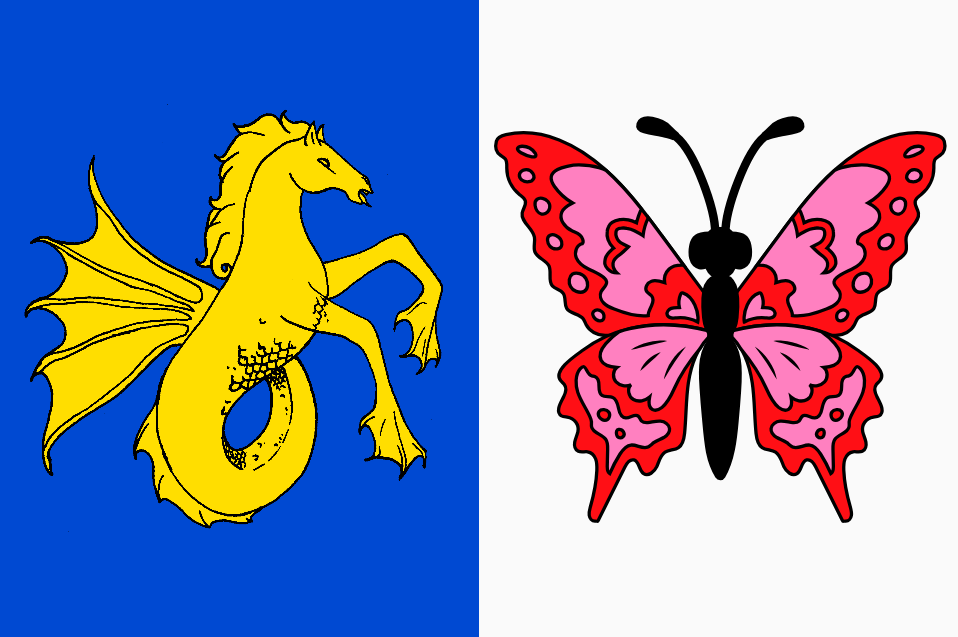
Blazon: A field per pale azure and argent. To dexter, a sea-horse rampant sinister or. To sinister, a butterfly volant gules et rose.

Okay, so I have a Thing about the proliferation of Stripes In A Gradient flags. I hate them, to put it lightly. I think queer people deserve Creatures and Beaſtes. In fact, transwomen picked out the butterfly and transmen picked out the seahorse long before my time! I discovered our mascots as a baby transboy way back in 2007 and was delighted. All I did was 'translate' the sea-horse into heraldic depiction, because I think hippocampus is a fun creature. For the joined flag, I swapped the field colours so the butterfly could be colourful, as butterflies should be, and added pink that way.

Transfem and Transmasc Flag


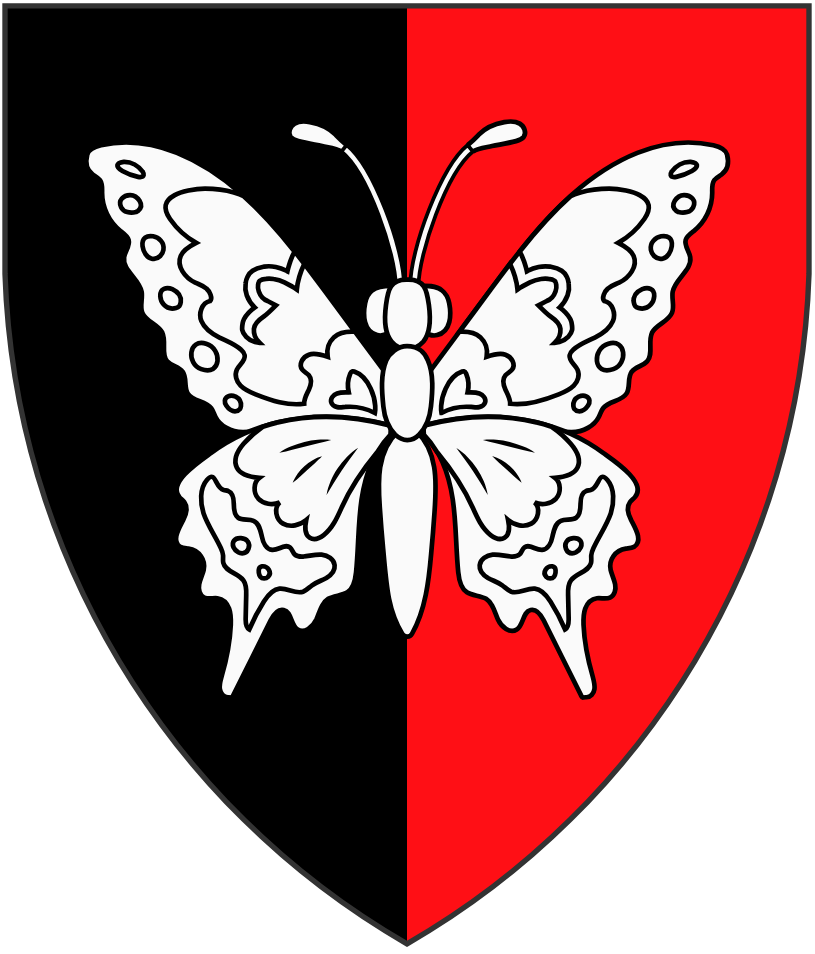
Transfem Blazon: A field per pale sable and gules, a butterfly volant argent.
Transmasc Blazon: A field per pale azure and sable, a sea-horse rampant.

The individual banners are more heraldic. I took the colours of the trans flag and made the colours basic heraldic ones, and added the black of flux and spring and transformation, as well as adding gold because many seahorse species are mostly yellow, including the most famous and well-recognised one. The sea-horse is facing the blue side to signify transmasc people going from a state of flux toward masculinity. I would have done the same with the butterfly but butterflies are symmetrical!

Non-Binary Flag


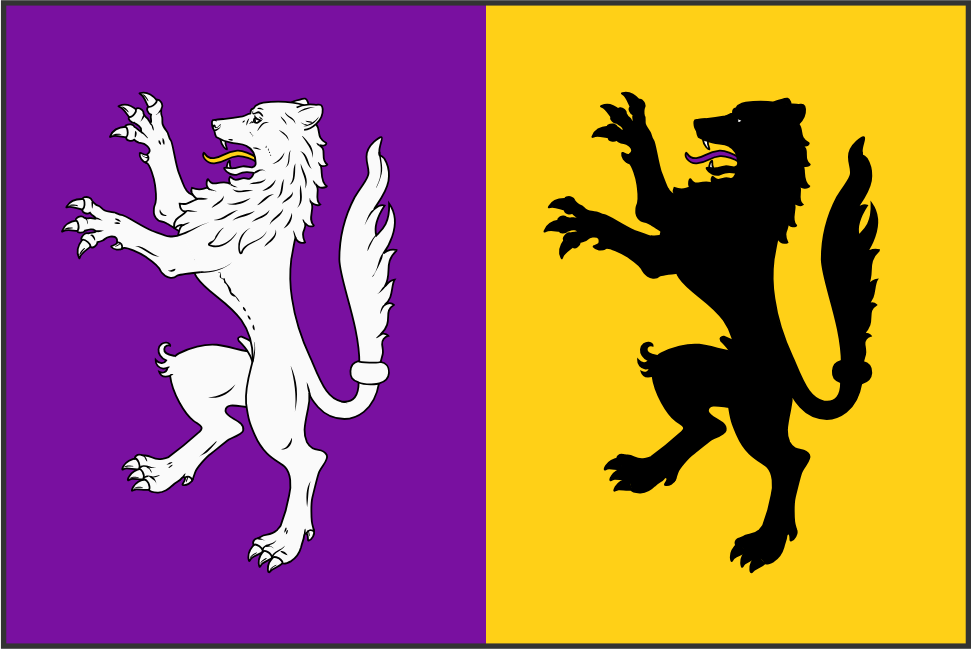
Blazon: A field per pale purpure and or, two werewolves rampant dexter; one argent langued or, one sable langued purpure.*

Werewolves are neither human nor wolf, no matter what they look like; they are always werewolves, and shift freely between shapes. Also, my best friend who is non-binary loves werewolves and wanted a werewolf to be the non-binary Creature. Heraldically speaking, a "werewolf" actually is a "wolf with human hands instead of feet, and human ears", so if you wanna get real correct, you could draw it that way too! These flags are not set in stone bc of how they look in this post!

Aromantic Flag


Blazon: A field counter-ermine. A saltire argent, upon it five pine trees proper.

I chose the saltire because it makes an X and that symbolises how aromantic people "X-out" of the idea of romantic stuff. I chose pine trees because my mother, who is aro, loves evergreen trees the most in the whole world; trees are also green, like the green stripes of the flag, so I thought it fitting. Trees are also not living beings that have any kind of pair-bonding, and yet also have sexual relations with other trees to make more trees. I used counter-ermine because it's more visually distinct and interesting. I wanted to also show that these flags can be made into any shape of shield or banner and still work.

Asexual Flag:


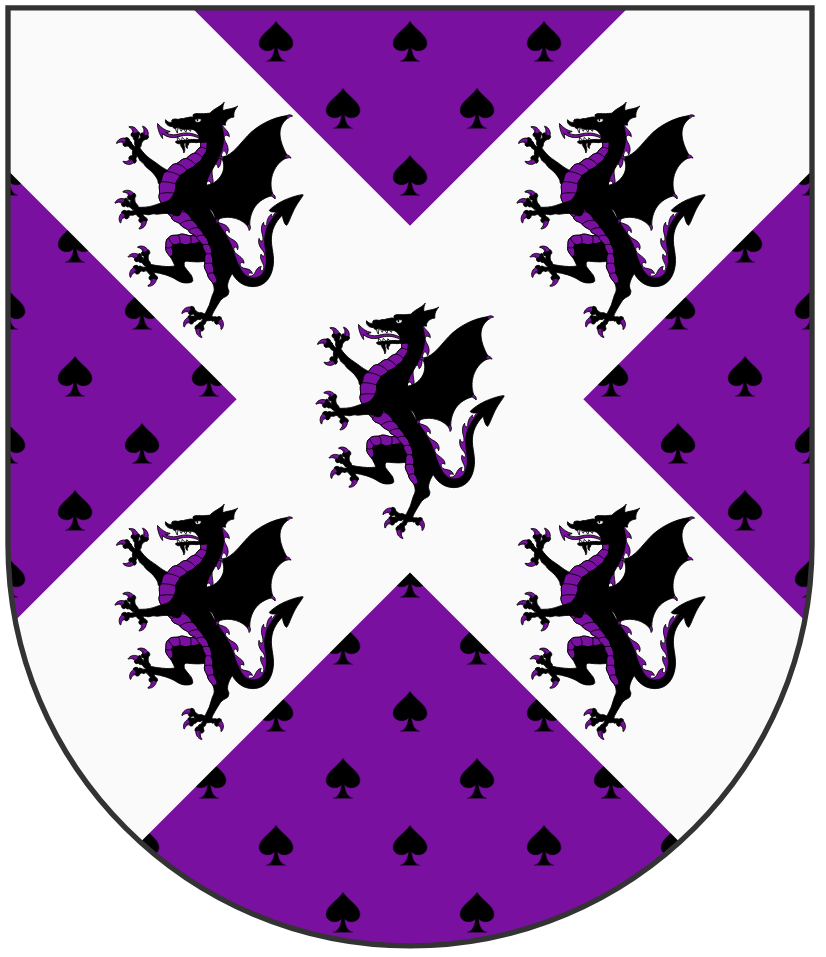
Blazon: A field semy pique purpure and sable. A saltire argent, upon it five dragons rampant sable and purpure.*

Another saltire, this time because asexuals do not interact with sex in the usual way or at all. Piques (i.e. the spade symbol) and dragons because in my long years in the community, I have seen these two symbols used the most for our community. Having a semy means I can include both the pique and the dragon without cluttering up the flag. This one is probably the most intricate and difficult to draw, but again, the dragons can be as detailed as this or can be like, trogdor or something. As long as they're recognisably dragons with four legs and two wings, and only one foot on the ground, you're good!

Intersex Flag (Distressed/At War)


Blazon: A field or per chevron purpure. A pile to base purpure. Two gouttes de sang, to base a unicorn rampant sinister or.

Ok so the intersex flag as it stands, the field or with the annulet purpure, is a perfectly fine heraldic flag. But the thing is, I’m angry about a few things that are going on with intersex people and have been going on with them for some time. So I made this “in distress” version of the flag, because we are at war!

So the two drops of blood are because intersex babies and children are mutilated to force them into the binary. The gold unicorn rampant is because we are simultaneously denied ambiguity by the medical establishment as adults, forced into the binary by way of being denied, “you’re not REALLY intersex because your genitals don’t look ambiguous enough”, when the standard for “ambiguous enough” is never met by judgement of the doctors–to them, a truly ambiguous enough, truly intersex person is imaginary, like a unicorn. And the chevron points up because we are fighting and our rights are on the rise if we stand UP!

Bonus: Monsterfucker Flag:


Blazon: A field per saltire tenné and or. A saltire sable.

The X is for Xeno, or 'strange', and X is also used for the Unknown, as is the black of the void. The orange is because Halloween is a monsters' holiday. The yellow is for joy and both moon and sunlight, for monsters encompass all possibilities. Yellow is also because I don't see it that much in pride flags, so using it here makes it distinctive.

Orange (Tenné;, which can also be depicted as tan or brown) is, like pink (rose), a very late addition to heraldry—as indeed it was to the English language!

Edited to Add (2 June 2025): I have not designed the lesbian, pan, or a few other flags because I am not in that group and a group member should design that flag. I am willing to help any that want to design such a flag to follow heraldic rules of grammar.

I have not designed the bi, genderqueer, or other flags of groups I AM in simply because either I have not had the time yet, and/or I haven't decided on or found out a good Creature to be our mascot. I am as always leaning toward Mythical Beaſtes not much seen or used, such as a peryton or a pantheon. I think perhaps a water- or air-based creature ought to be the one for genderqueer or genderfluid, as water and air are the mutable and changeable elements of transformation and flux.
aetherograph: A black demon in a pink button-down shirt. His head is a floating cube with pastel pink and green sides and sfour strange eyes asymmetrically placed on two of the sides. (Default)

As the month of March passes into April, I would like to challenge my fellow pagans to do something.

Look around you.

Look around where you actually live. What animals actually live there? What do the seasons ACTUALLY do where YOU live?

Four seasons, january being winter, and the presence of oak or deer or rain is dependent on the biome where you live.

I spent my early life in a desert, where the idea of snow and frost was foreign. The only snow was up on the mountains and you went and visited it and then came home. And yet I was told we were celebrating warmth in the winter during solstice, as though the weather wasn't clear sunny skies and 80 degrees Fahrenheit! As though April was a time of rain and new life when all that happens in January, for about two weeks.

The four season agrarian idea of the year and the seasons, the European idea of forests with certain animals, the Northern Hemisphere idea of winter in january and summer in june... these are all colonising every single book or guide or conversation about pagan holidays I have ever seen.

But we are supposed to celebrate where we are, the land where we are, our home and our reality.

I am not a farmer. Why should I celebrate farm related holidays? If I live in a desert in California, or a tropical marsh in Georgia, why can't I celebrate those seasons, those plants, those animals? Why am I hanging holly and mistletoe in December when cypress and palm are the plants in my backyard? You know?

When I realised I didn't have to conform to just ONE location's seasons, when I realised it was more important to celebrate where I am, a lot of the wheel of the year stuff stops making any sense and seems kind of oppressive.

There are so many beautiful biomes in the world, from the cloud-forests of Aotearoa, to the deserts of Mojave, to the Okavango's ephemeral floodplain, to the salmon-fed rainforest of Sequoia, the everglades of Florida, the mangroves at the edge of the world, and, yes, the bogs and woodland of Europe too. Even if you live in the middle of a city, that too is a biome, and a rich one if you pay attention!

But look around you, look around at the sister-plants and brother-animals around you. What is happening through YOUR grove's year?

Smash the year wheel if it doesn't accurately reflect your surroundings. Make a new one that celebrates where you are.


aetherograph: A black demon in a pink button-down shirt. His head is a floating cube with pastel pink and green sides and sfour strange eyes asymmetrically placed on two of the sides. (Default)

Punk Stuff: Repair Furniture

So your office chair is sinking no matter what you do, or the wheels snapped off, or the cushion went flat, or your cat tore of the upholstery?

All of that is fixable--IF you have furniture made of wood. The way you can tell is flip the chair over. Do you see some staples or some plastic? If you see staples, there is wood under there and you CAN repair this creature. If you only see plastic, I'm sorry but that chair was manufactured as trash first and a chair second.

Tools for tearing off the old upholstery and putting new upholstery on:

  • Staple gun
  • Staple remover for staple gun staples (this is a specific tool you can't use an office staple remover for this, it isn't strong enough)
  • Pliers
  • Staples for the staple gun
  • Fabric scissors
  • Utility Knife

Materials:

  • Fabric (heavy)

Step one: Flip the chair over, find the staples and start removing them. Do not fuss about the weird tissue-like stuff covering the bottom of the chair. That's fine to rip, it WILL rip, it's fine don't worry about it. This will be TEDIOUS. You may need to use pliers for some of the difficult bastards.

Now, if you WANT to make this a little easier, you can disassemble the entire chair--take the bolts that hold the chair lever and lift and rolly legs off, take off the bolts that hold the backrest on, and now you can work on the chair seat (or backrest) separately. But remember to take photos of the chair before removing the bolts, so you know how to put it back together. And keep track of which bolts go where, put them in like a section plate or something.

Step two: remove the fabric. At this stage you can also replace the foam. This will require 1. foam and possibly 2. a tool called a Hot Knife. You can also use 3. batting if you want to be Fancy.

Step three: lay the old fabric out on the new fabric and trace it on the wrong wide of the new fabric with a marker. Sure you could use tailor's chair or smn but I can SEE a marker a lot better.

Step four: Cut that new fabric shape out.

Step Five: Put the new fabric on the chair and staple one (1) staple in the middle of EACH side. Not a corner, a SIDE. It's best to pick the backmost side, the one that bumps into the backrest cushion, as your first staple, then the frontmost, then the left and right.

Step six: Start stapling around the edge, pulling the fabric snug but not crushing the cushion foam too tight. It will pucker on the bottom part, that's ok.

Step Seven: If you have disassembled the chair, re-assemble it.

Boom, done.

If you need to replace the hydraulic lift, that's a bit complicated but a new lift is like $20! There's also a special set of tools you'll need to remove the old lift, they're under $20 and you can help your friends or donate the kit to a maker space or repair OTHER chairs. And you just take the chair off the old lift, pull it off the rolly legs, and put the new one in, and set the chair on it, and bam, done. Lifts just sit there! They don't need bolts or nothin.

If you need to replace the rolly legs bc one snapped off, you can do that too and replacement legs are like $20. You'll have to just flip the chair over and pull off the old legs, which may require some help or a mallet. The new set of legs may also come with instructions! I have never done this one, but I have put many chairs together and the rolly legs aren't really bolted onto the lift at all, just stay together from gravity really.

If you need to replace the wheels, THAT is a bitch. That is a bitch. Pulling the old wheels OFF is the hard part. Putting the new wheels on is p easy though, and they make wheels that won't rip up carpet or wood floor too! Some of them even light up!

If you want to repair a SOFA or something, that can be a lil complicated and involve SPRINGS. Springs are a sign of Good Quality Furniture though, as is a wooden frame.

Anything without a wooden frame is designed to be trash. If it has a wooden frame, though, you can repair the hell out of it. New springs are cheap, so is twine, so is foam and batting; really, the most expensive part is the upholstery fabric, and caster wheels if you're getting caster wheels. You can put legs and/or wheels on most anything, btw.

And you know, repairing your own furniture is a lot of fun! You can customise it, you can get sth cheap as hell and fix it up! It's not a garage craft that requires a helluva lot of strength or ability either. I do get tired and need help with some of these steps, and space them out; but my joints is real fuckened and I can still fuck with an office chair or repair a sofa spring.

Just remember: wood and especially soft things like fabric or foam can harbor bedbugs & fleas. Do not shop on the curb unless you have a bug oven big enough to cook them dead!

 ETA 2 Feb 2025:

By the way, sources of wood for repair:

  • Pallets, these are usually free but they're a lot of labour to take apart and make into useable wood. I know of a guy who makes everything from pallets though, have a look at his channel, he shows exactly how much work it is to make a pallet into useable wood.
  • Old furniture, particularly TABLE TOPS, are a great source of good-quality large pieces! I learned that from one of my furniture guys today.

And yeah, watch Furniture Guys on youtube to observe how much work things are, what tools are needed, etc. I've learned a lot. I tend toward channels that have minimal or zero talking, where all the explaining happens in captions or not at all.

AT Restoration is another of my fav furniture guys, but I gotta give props to the ORIGINAL Furniture Guys, Ed Feldman and Joe L'Erario! I grew up watching their show on TLC back before there was any kind of HG Network or anything like that, when home improvement shows were just Bob Vila and Home Time and then these comedic characters, Joe and Ed. They're the only furniture guys I want talking in their videos.

aetherograph: A black demon in a pink button-down shirt. His head is a floating cube with pastel pink and green sides and sfour strange eyes asymmetrically placed on two of the sides. (Default)

In January, I may be on a panel discussing how to countenance enjoying the art of bigoted artists. On that panel, I will point out the facts as I know them: that there is a reason for Innocent Until Proven Guilty, that As Long As A Man Is Alive He Can Change, and so forth. Pillars that form a just society, a non-fascist society, a society that does not slide into mobs and censorship and purity culture. It will make a lot of people very angry and they may not listen, and they will certainly jump to that island so frequented in the past few years, Conclusions.They will likely conclude I am bigoted because I am defending the humanity of bigots, and not saying they should be put to death and their works burned from public memory. It is frightening to accept this, but I cannot change it.

I may not even be on the panel, anyway. But I am of a nature that I must prepare, and even if I am not on this panel, that is still something I must say.

We must continue to allow ourselves and others to for example discuss Harry Potter, to discuss Bill Cosby’s large body of work, as we discuss Kipling, or Shakespeare, or any of the other dead creative people whose work contains bigotry, whose actions included crimes. And the discussion should not begin and end with apologies and lists of their crimes, or listing off only the bad things we can find in their work. That is not a discussion, that is a reading of sins and an invitation to condemn only. We cannot simply refuse to mention the positive aspects, that is disingenuous and it is censorship. There is no such thing as a bad or good person, there are actions. A person is a person, no matter how much harm they have done. The persons who have raped me, who have physically harmed me, who have abused me—they are still human persons, and still deserve food when they are hungry, and medicine if they are sick, and coolth if they are hot. They are still human beings who are capable of and have made art, some of them—and who have had helpful influence on other people, some of them.

It is, for some people, for the short-term, very emotionally satisfying, to hate. It is even emotionally satisfying to hate in a group with other people. But it is dangerous, to get addicted to righteous anger. It makes you prone to want an excuse to feel it, to unleash actions fuelled by it and that fuel it. It is very comforting to believe the world is simple, that people are simply one thing or the other; but it isn’t true. The truth is, people are complicated, and the world is complicated, and people who do horrific things can often then turn around and do wonderful things. And often, they do both at the same time. It is not human, to hate—it is specifically dehumanising, to be taught to hate, to hate; we must dehumanise another person in order to hate them, and we dehumanise ourselves by hating other people.

And another thing? There is no such thing as moral or immoral art (because, let’s be clear, that is what ‘good’ and ‘bad’ mean); there is only art. The only standard you can judge it by is whether it was well-executed or poorly-executed. Doing anything else is one step toward censorship. Yes, even art that is bigoted is still art. You cannot say it’s not art, or that it shouldn’t be available, because that is censorship, and that is the tool of fascism. There is not a ‘correct’ way to censor anything, there are no ‘correct’ things to censor. Art should not be censored, period. As soon as you make a category of ‘don’t’, you invite yourself to put your enemies, or things you just dislike, or things that discomfit you, into that category. There is no exception to this, this is what always happens when you begin censoring art.

I am fond of a little tv show from the seventies and eighties called Rumpole of the Bailey. It is about a defence lawyer who never pleads guilty, and the show does not pull punches about what that means—Rumpole defends people accused of hate speech, of rape, of blackmail, of everything uncomfortable and everything we would like to believe anyone accused is automatically guilty of. But Rumpole always says the Golden Thread of Justice, the foundation of the justice system as we know it, is Innocent Until Proven Guilty. In other words, if you accuse someone of something, the burden of proving it is on you, the accuser. Accusing someone is easy; proving your accusation is hard. This is on purpose. This is because it is better to let a guilty person go free than falsely convict an innocent person. Doing otherwise is going to get a lot of innocent people slaughtered for increasingly minor accusations with fewer and fewer pieces of evidence until we’re back to exactly the kind of ‘justice’ enacted by witch hunts, which were largely what happens when people

  1. want something you have
  2. want someone to blame when there really isn’t anyone to blame, or
  3. just plain don’t like you.

So no, we can’t go around simply believing every accusation all the time, no matter what the accusation is. We must demand evidence, every time, no matter what. And if we only apply these rules in court, that isn’t enough. “The Devil is in the details” as the saying goes—we have to apply these principles in small situations as well as large ones.

Another thing Rumpole says is “The law is like a spider’s web, it catches the small flies but the big ones break through. Just ask any politician.” and “The trouble with justice is that it’s not always just. But it’s the best we’ve got, so we have to make the most of it.” So this is not to say he doesn’t have a sense of right and wrong, or that the writer and the stories don’t deal with reality as it is, where people lie and cheat and get away with it sometimes. Even so, the burden of proof always rests on the accuser, not the accused, or there is no such thing as Justice at all.

aetherograph: A black demon in a pink button-down shirt. His head is a floating cube with pastel pink and green sides and sfour strange eyes asymmetrically placed on two of the sides. (Default)

I recorded a demo reel showcasing some of the voices I can do! I've long been told I should do something about how decently I can play with my voice, and so here it is! Check it out! I've included transcriptions beneath the cut below.

Transcription )

Credits:

Nolan, Christopher. Dark Knight. Warner Bros. Pictures, 2008. 152 minutes.

Pratchett, Terry. Monstrous Regiment. New York: Doubleday, 2003.

Priestly, John. An Inspector Calls. 1945.

There was ad-libbing but not enough to note.

aetherograph: A black demon in a pink button-down shirt. His head is a floating cube with pastel pink and green sides and sfour strange eyes asymmetrically placed on two of the sides. (Default)

The Secret Life of People With High Self-Control: It's Simpler* Than You Think


*nb: Changed 'Easier' to 'Simpler' to make the point of the article clearer and less clickbait-y.

That feel when one of your disabilities helps with one of the New Shiny Mental Illnesses Invented By Modern Society: the reason I don't 'mindlessly scroll social media on my phone' is because that physically hurts. I learned VERY early in my life from my mom, who also has deQuervain's, that managing the pain is largely AVOIDING activities that trigger it, like scrolling and other tiny, repetitive mouse movements.

I didn't wholly avoid Social Media Mental Illness, because social media was desktop-based for a while, and I did ruin friendships because of how social media preys on your brain, and the parts of your brain it preys on, are particular spots where I'm more vulnerable than others, particularly when it comes to emotional regulation-something traumatised people do not do very well, particularly before therapy, as I was when I first got on social media. However, I also didn't get any reward, for those same reasons (I don't recognise anything but direct private conversation as 'attention') and while my history of remake-delete-remake is spotty and repetitive, I never ended up putting social media on my phone , and never ever learned the phone habits, because of the simple fact that I cannot use my thumbs for anything ever, and generally can't do repetitive tiny touchscreen movements with my fingers, because it immediately begins to cause agonising pain. I had tiktok very briefly because I discovered cosplay, but after it became clear people didn't make friends there, the whole thing seemed very frustrating-you can't talk to the cosplayer, they only respond to other videos that entertain them, and I don't like making videos because that's not the fanwork I make-so I deleted it after only a couple of weeks.

This article is from someone who gorged on a whole lot of academia about the topic, and mostly, people with 'good self-control' recognise what tests it at an earlier stage and avoid the situations, places, etc that they know the triggers are likely to be-installing ad-blockers, not making social media counts at all, etc. This is in keeping with the REAL way to control anger as well: you learn what anger looks like before it becomes anger, when it's just a feeling of slight irritation or even knowing 'going out to do groceries overstimulates me and that causes irritation with people to come easier, so I need to mitigate the overstimulation by wearing headphones at the grocery store and being alone for a while to recover when I get home' or 'I am feeling irritated by everything, that means I need to walk away from this conversation and disconnect for a bit'. Basically, the only thing that is going to help you learn any 'self-control' is the same thing that helps you learn 'anger management': catching it before it snowballs into 'resisting temptation' at all.

Which, of course, means practising real mindfulness-- not 'uwu imagine your thoughts are leaves on a stream' 'just take deep breaths and empty your mind' nonsense*; but what you learn in DBT classes: spending a lot more time with your self, sitting with your uncomfortable feelings without judging yourself immediately as 'bad' and running away screaming.

We've looped right back to Vincit qui se Vincit/Know Thyself, like we've really just got hard data backing up these sayings now. You have to know yourself and know what helps you before you can make any progress at all. And that requires being uncomfortable and spending time with a person that a lot of us hate so vehemently that we fill our lives with distractions so we never have to be alone with this person. Which is sad. That's sad. And that's not something to make haha funnysilly jokes about all the time instead of like, confronting or acknowledging as the one thing you gotta do before you can feel better about anything in any way.

Γνῶθι σαυτόν

Know Thyself


*I specifically say meditation of the 'deep breaths and empty your thoughts' is nonsense because that doesn't work for people with Symptoms and is in fact specifically going to make some people with some Symptoms worse, and I have many of those Symptoms.

aetherograph: A black demon in a pink button-down shirt. His head is a floating cube with pastel pink and green sides and sfour strange eyes asymmetrically placed on two of the sides. (Default)
Gonna try and use this blog for my professional presence online as a writer. Not sure what to put here yet, but stay tuned.

Profile

aetherograph: A black demon in a pink button-down shirt. His head is a floating cube with pastel pink and green sides and sfour strange eyes asymmetrically placed on two of the sides. (Default)
aetherograph